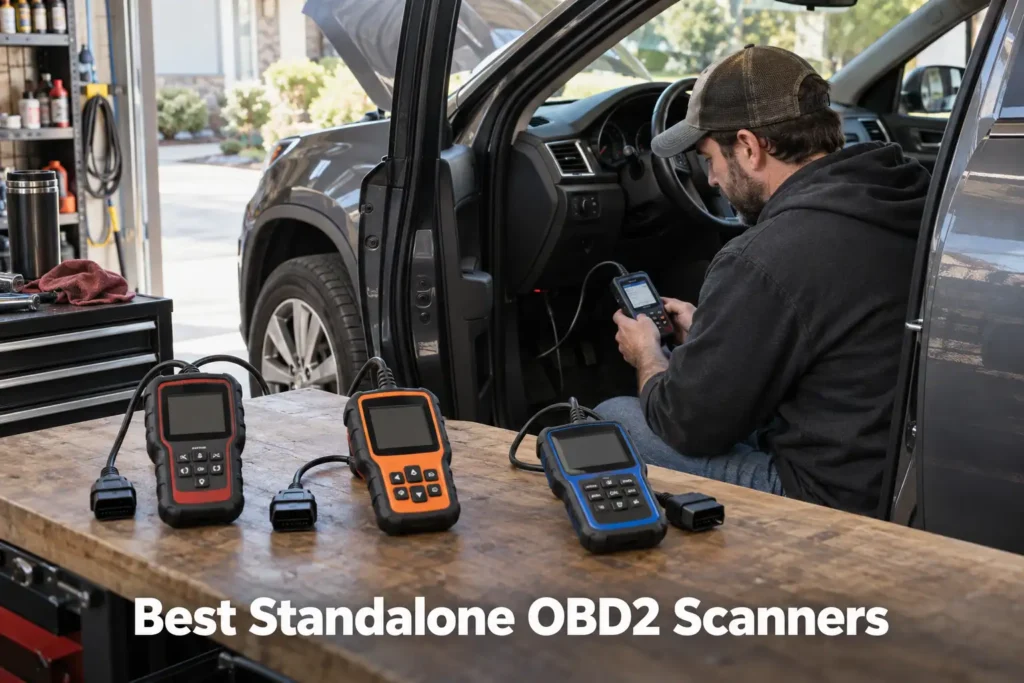
11 Best Standalone OBD2 Scanners That Don’t Require a Phone in 2026
A smartphone is not a requirement for serious vehicle diagnostics.
Bluetooth OBD2 adapters are convenient, compact and often excellent value, but many drivers and DIY mechanics simply do not want their personal phone to become part of the diagnostic tool.
They want to plug in a scanner, turn it on and diagnose the vehicle. No Bluetooth pairing. No app selection. No phone battery drain. No incoming calls covering the live-data screen. No uncertainty about whether an operating-system update will affect the diagnostic app.
For this guide, Scan Choice Guide focused on one specific buying question: which standalone scanners make the most sense in 2026 for buyers who want their diagnostic hardware to work without requiring a personal smartphone?
“Standalone” does not mean every scanner has the same diagnostic depth. This guide deliberately includes several tiers (from simple Check Engine readers to ABS/SRS tools, four-system scanners and advanced all-system handhelds) because “I don’t want to use my phone” describes a workflow preference, not a single capability level.
We evaluated manufacturer-documented diagnostic capability, screen/interface, live data, enhanced-system access, service functions, active tests where available, update policy, current U.S. market relevance and buyer fit.
Our recommendations are based on current manufacturer documentation, current 2026 market research and SCG comparative analysis. The results we present come from our own research into manufacturer documentation, Amazon listings, and compatibility data.
Our Top Picks for Standalone Scanners
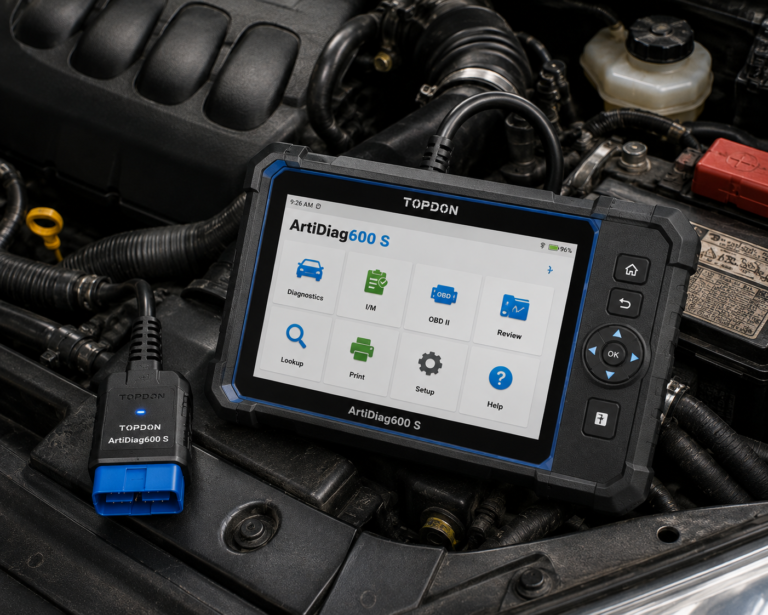
TOPDON ArtiDiag600 S
- Engine, transmission, ABS and SRS diagnostics
- CAN FD support
- Lifetime free updates currently listed
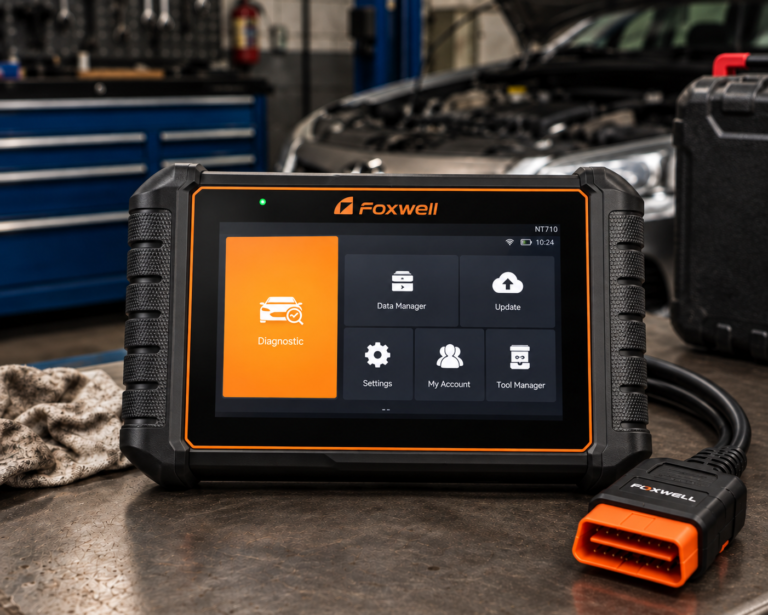
Foxwell NT710
- Self-contained Android-based scanner
- All-system diagnostic positioning
- Bidirectional capability
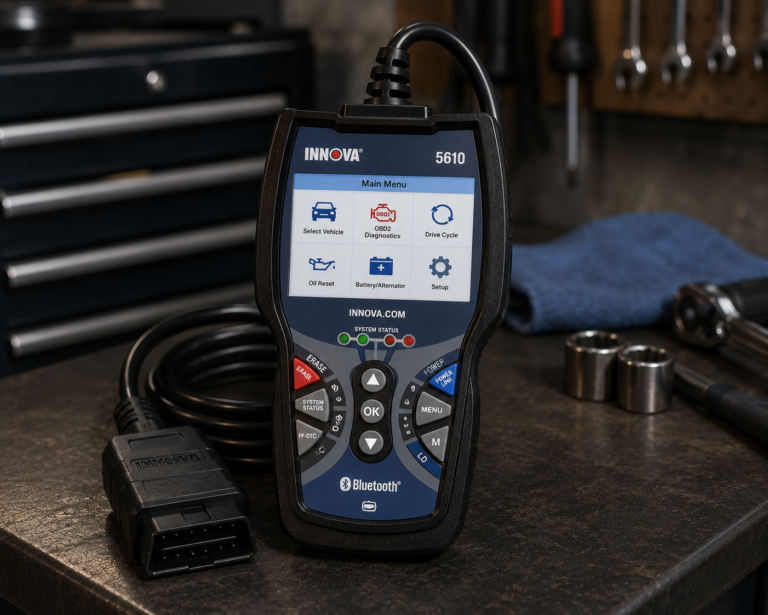
Innova 5610
- Standalone handheld operation
- All-system diagnostic positioning
- Supported bidirectional active tests
Affiliate Disclosure: Scan Choice Guide is a participant in the Amazon Services LLC Associates Program, an affiliate advertising program designed to provide a means for sites to earn advertising fees by advertising and linking to Amazon.com.
The 11 Best Standalone OBD2 Scanners, Reviewed in Detail
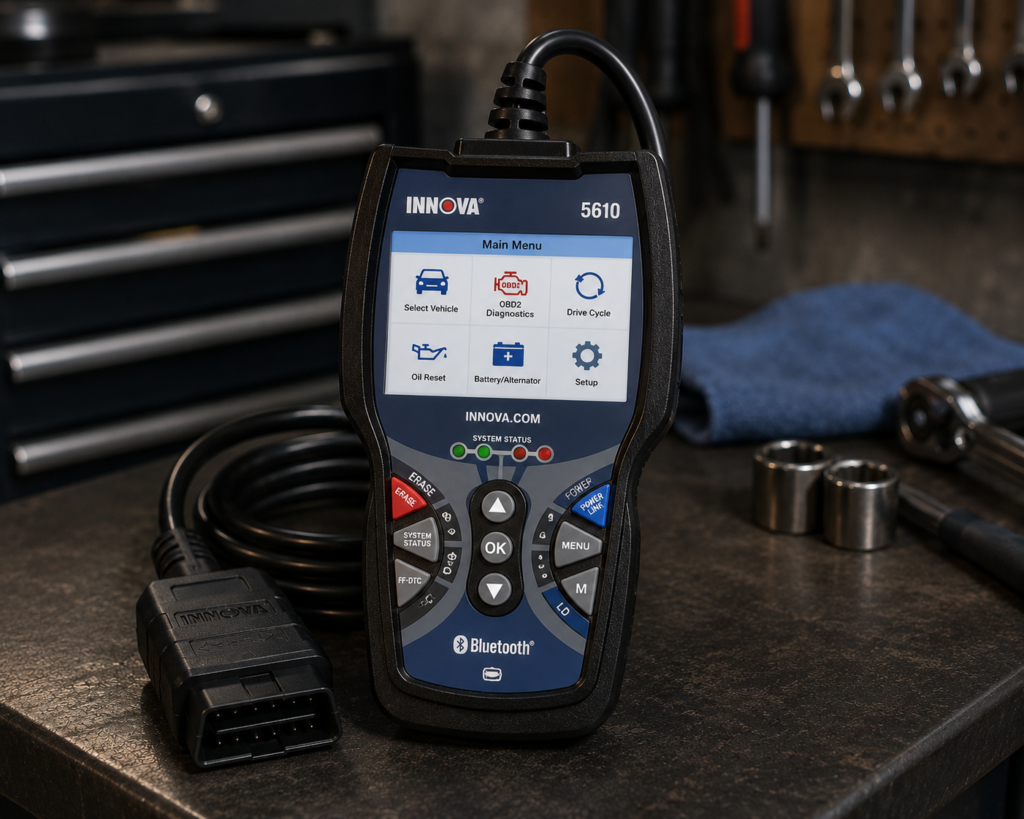
1. Innova 5610: Best Overall Standalone OBD2 Scanner
Why We Picked It
The Innova 5610 demonstrates why “standalone” should not be confused with “basic.”
Current 2026 competitor research repeatedly identifies the 5610 as one of the strongest phone-free handheld choices for advanced DIY diagnostics.
More importantly, Innova’s current documentation confirms that the scanner itself provides broad diagnostic capability and that a smartphone is not required for the core diagnostic workflow.
Innova currently positions the 5610 as an all-system scanner with supported bidirectional active tests, service functions, enhanced live data and free updates.
The RepairSolutions2 app exists as an additional ecosystem, but the physical scanner remains a self-contained diagnostic tool.
That distinction is central to this guide.
Where It Falls Short
The 5610 is heavily North American-focused.
Innova currently states that the product is intended for the United States and Canada and that features vary by year, make and model.
There are also limitations around newer FCA secure-gateway vehicles.
And while the 5610 is advanced for a handheld, it is not a universal ECU coding/programming platform.
| Specification | Details |
|---|---|
| Form Factor | Handheld unit with dedicated screen |
| App Integration | RepairSolutions2 app (Innova states 4M users) |
| Bidirectional Control | Confirmed; commands ABS pumps, fuel injectors, and other components directly |
| Reset Functions | 20+ confirmed by Innova, including oil, battery, EPB, DPF, TPMS relearn, key coding, injector coding, EV/HEV/PHEV battery health |
| ECU Coding / Reprogramming | Not supported, stated directly by Innova |
| Vehicle Coverage | Most 1996-2023 US/Canada OBD2 vehicles; North America only |
| FCA Vehicles | 2018+ requires Innova’s AutoAuth process for full functionality |
| Update Policy | Free updates, no subscription, confirmed directly by Innova |
| Pros | Cons |
|---|---|
| Standalone handheld operation | North America only; not for use outside the US/Canada |
| All-system diagnostic positioning | |
| Supported bidirectional active tests | |
| Enhanced live data | |
| Service functions | |
| Free updates currently stated | |
| No subscription currently stated | |
| Strong current 2026 market visibility | |
| No phone required for core scanning |
Best For
North American DIY mechanics who want serious diagnostic depth in a self-contained handheld rather than a phone or large professional tablet.
SCG Verdict
The 5610 is our overall standalone choice because it proves that phone independence does not require giving up all-system diagnostics and supported active tests. See our full Innova 5610 review for the complete case for phone-free, all-system diagnostics.
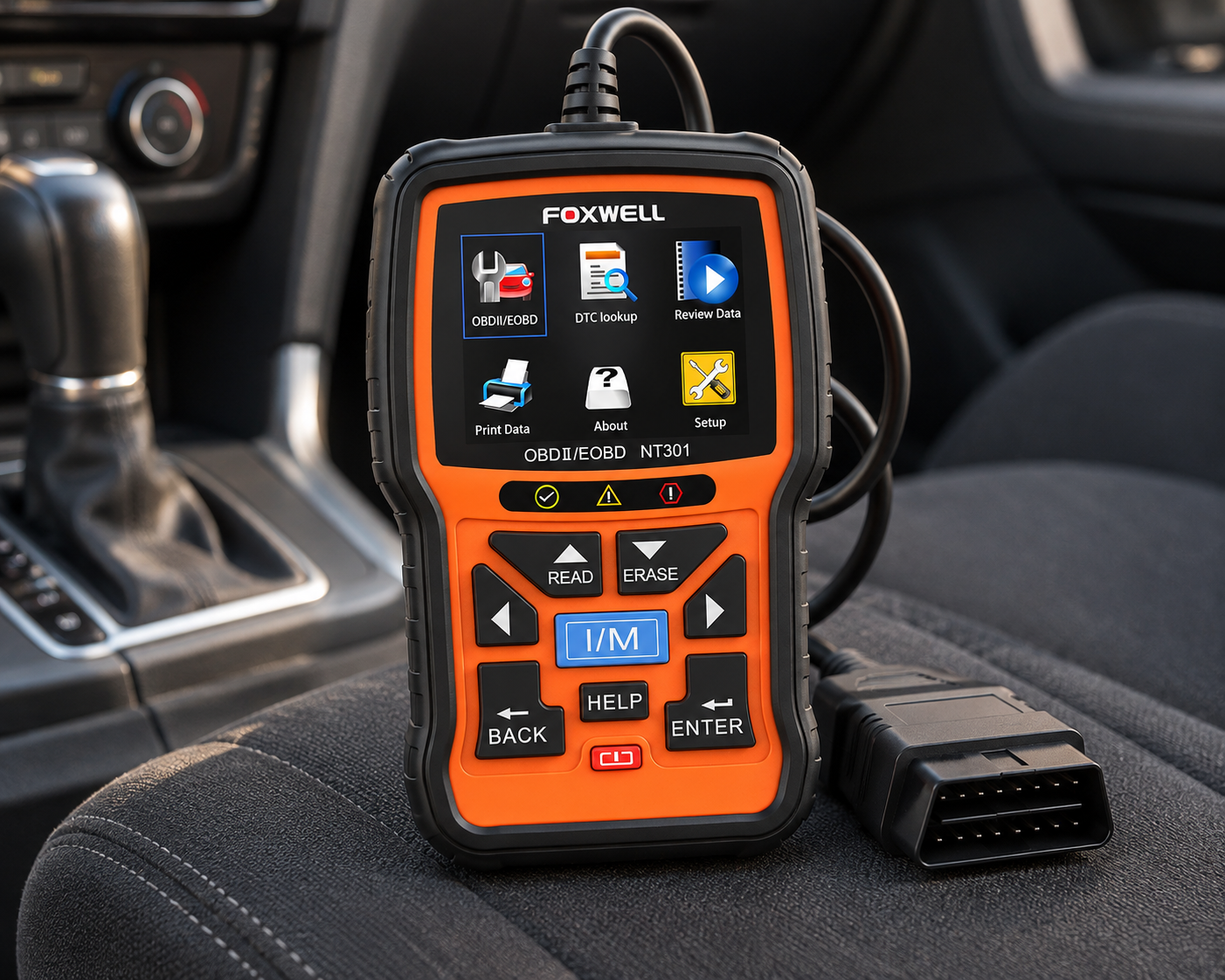
2. Foxwell NT301: Best Budget Standalone Scanner
Why We Picked It
The NT301 is almost the opposite of the 5610.
That is exactly why both belong in this guide.
Current 2026 search results repeatedly identify the NT301 as a strong “no phone, no app” recommendation.
Its appeal is immediate: plug the cable into the vehicle, use the built-in color screen, read the engine code, check live data, review I/M readiness.
No account or smartphone is needed.
For many owners, that is all the scanner they actually need.
Where It Falls Short
The NT301 is primarily an engine/emissions OBD2 scanner.
It does not become a full-system scanner merely because it has its own screen.
Buyers who need ABS, SRS, transmission or active tests should move to another product in this guide.
| Pros | Cons |
|---|---|
| Self-contained handheld | Engine/emissions focused |
| Built-in color screen | |
| No phone | |
| No app | |
| Generic OBD2 diagnostics | |
| Live data | No broad ABS/SRS access |
| I/M readiness | |
| Strong current market visibility | |
| Simple ownership |
Best For
Drivers who want the simplest practical dedicated scanner for Check Engine and emissions-related diagnostics.
SCG Verdict
NT301 is the budget standalone benchmark because it removes unnecessary setup without pretending to provide diagnostic functions outside its class.
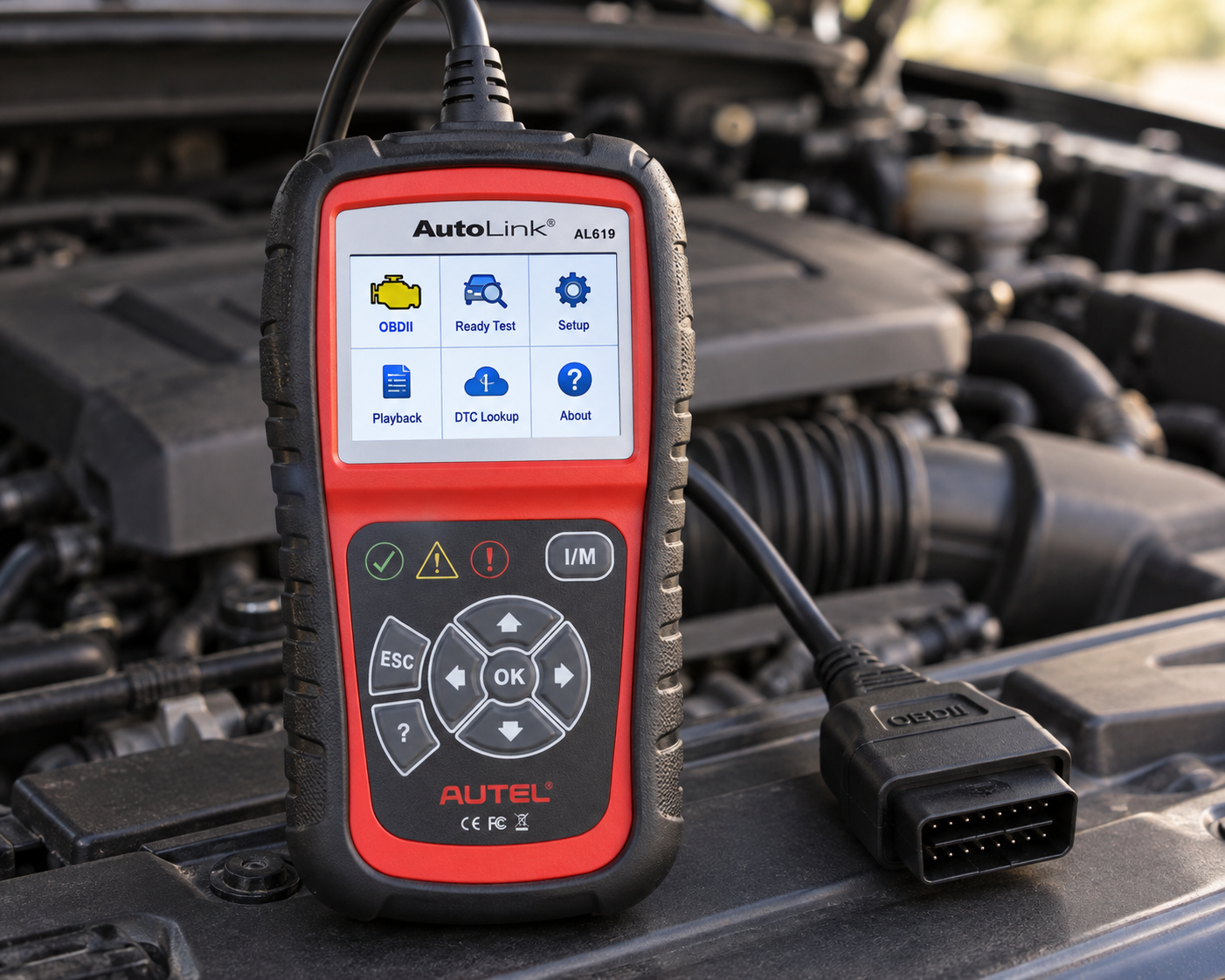
3. Autel AutoLink AL619: Best Standalone Scanner for ABS and SRS
Why We Picked It
A basic standalone scanner solves the phone problem.
The AL619 also solves another common problem: the warning light is not the Check Engine light.
Autel builds the AL619 around ABS and SRS/Airbag fault detection, diagnosing supported systems and retrieving and clearing codes, alongside the standard OBD2 functions, live PCM data and graphing every handheld in this category needs.
What makes it fit here specifically is that none of that requires a phone at any point, the screen, the buttons and the diagnostic logic are all in the unit itself.
Where It Falls Short
AL619 is focused rather than full-system.
ABS/SRS coverage remains vehicle-dependent.
It is not the right choice for buyers who need broad active testing, coding or whole-vehicle module access.
| Pros | Cons |
|---|---|
| Dedicated handheld | Not full-system |
| ABS diagnostics on supported vehicles | |
| SRS/Airbag diagnostics on supported vehicles | |
| Full standard OBD2 functions | |
| Live PCM data | Exact ABS/SRS coverage varies |
| Graphing | |
| No smartphone required |
Best For
Owners who want a phone-free scanner specifically because their diagnostic needs extend beyond the Check Engine light to ABS or airbag faults.
SCG Verdict
AL619 is the focused safety-system choice: substantially more useful than an engine-only reader when ABS/SRS is the actual reason for buying the scanner.
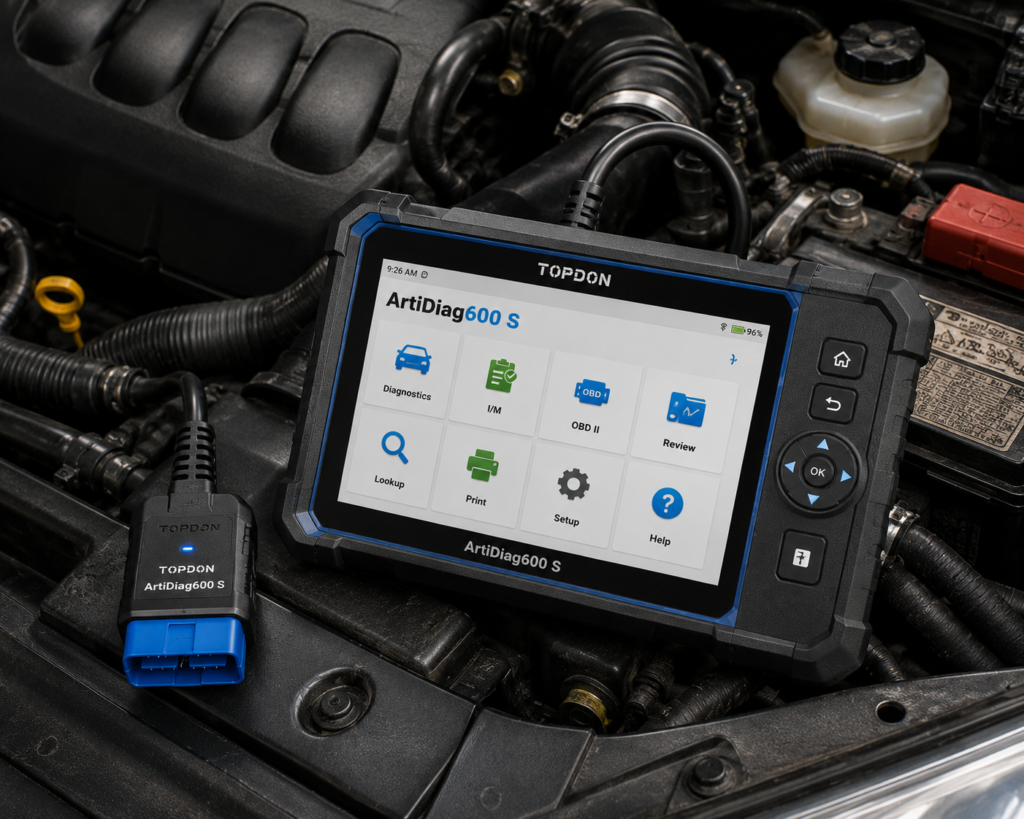
4. TOPDON ArtiDiag600 S: Best Four-System Standalone Scanner
Why We Picked It
TOPDON explicitly describes the ArtiDiag600 S as independent.
Its current U.S. product page confirms a 5-inch display and diagnosis of four core vehicle systems: Engine, Transmission, ABS, SRS/Airbag.
TOPDON also currently lists CAN FD, AutoVIN, nine service functions (including supported ABS bleeding) and free lifetime software updates.
This creates a useful middle ground.
It is much more capable than a generic code reader but does not force the buyer into a full professional tablet.
Where It Falls Short
Four-system diagnostics are not full-system diagnostics.
The nine service functions are also vehicle-dependent.
The presence of ABS Bleeding or Injector Coding in the menu does not prove support for every vehicle.
| Specification | Details |
|---|---|
| Display | 5-inch TFT touchscreen |
| Processor / Memory | 4-core 1.5GHz, 2GB RAM / 32GB ROM |
| Battery | 3350mAh |
| Systems covered | Engine, transmission, airbag, ABS (4 systems) |
| Protocols | CAN-FD, supports 1996-and-newer vehicles |
| Vehicle coverage | 70+ brands (TOPDON) |
| Bidirectional control | Confirmed on TOPDON’s own spec table (scope/count not detailed) |
| Coding | “Online Coding” confirmed on TOPDON’s own spec table; Injector Coding as a named service function |
| Service/reset functions | 9 (Oil, Brake, SAS, BMS, ABS Bleeding, ETS, Injector Coding, DPF, TPMS) |
| Wireless | WiFi for software updates only, not vehicle connection |
| Warranty / updates | 1-year warranty, free lifetime updates |
| Pros | Cons |
|---|---|
| Independent dedicated scanner | WiFi is for software updates only, not a wireless diagnostic connection |
| 5-inch display | |
| Engine diagnostics | |
| Transmission diagnostics | |
| ABS diagnostics | |
| SRS diagnostics | |
| CAN FD | |
| Nine service functions currently listed | |
| AutoVIN | |
| Lifetime free updates currently listed |
Best For
DIY users who want substantially more diagnostic depth than a basic handheld but still prefer a compact self-contained device.
SCG Verdict
ArtiDiag600 S is the four-system sweet spot for phone-free buyers who need engine, transmission, ABS and SRS access in one independent scanner. Our full TOPDON ArtiDiag600 S review covers exactly how it splits engine, transmission, ABS and SRS access.
5. Autel MaxiCheck Pro: Best for Brake and Service Work
Why We Picked It
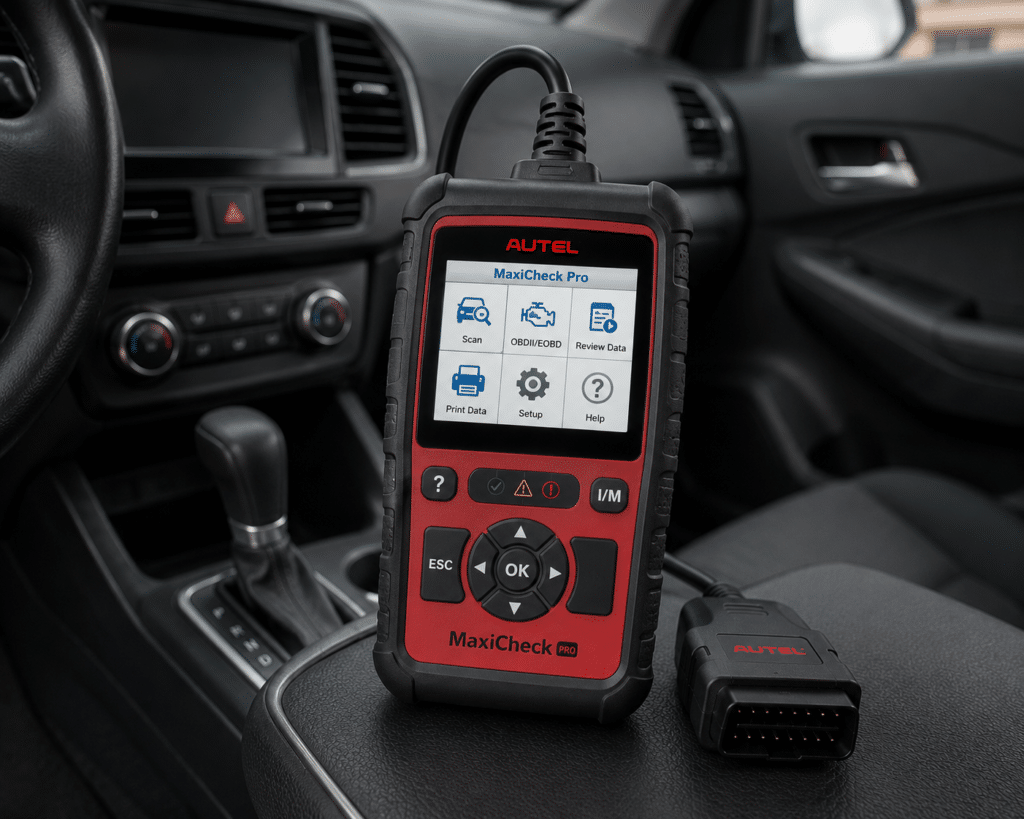
The MaxiCheck Pro is not designed primarily around the number of modules it can scan.
It is designed around service work.
Autel officially positions it for systems and functions including EPB, oil service, ABS, SRS, BMS and DPF.
The manufacturer also documents electronic brake-caliper operation, supported ABS bidirectional functionality, steering-angle reset, SRS coverage and OBD2 live-data recording/playback.
That makes it a particularly interesting standalone tool for an owner whose work involves maintenance and brake-related procedures rather than simply reading engine codes.
Where It Falls Short
This is a specialized service tool.
It should not be confused with Autel’s current full-system tablets.
Vehicle coverage for individual functions must be checked.
Its interface is also more traditional than newer Android-based scanners.
| Specification | Details |
|---|---|
| Display | TFT color, 320×240 |
| Connectivity | Wired only; USB software updates; no wireless |
| Bidirectional control | Confirmed, ABS-specific (automated bleed, brake caliper open/close) |
| SRS coverage | 50 named US, Asian, European makes |
| ECU coding | Not listed on Autel’s own page |
| Reset functions | ~6-8 depending on source: oil, EPB/SBC, SAS, DPF, ABS bleed, SRS/airbag; battery service category less explicitly documented |
| Update policy | “Lifetime Update” listed on Amazon and by resellers; not listed on Autel’s primary page |
| Pros | Cons |
|---|---|
| Dedicated standalone unit | No wireless connectivity; updates and use are wired only |
| Complete OBD2/EOBD coverage | |
| EPB functions | |
| ABS-related service capability | |
| SRS coverage | |
| BMS/DPF-related service functions | |
| Steering-angle reset | |
| Live-data record/playback | |
| No phone required |
Best For
DIY mechanics and technicians who prioritize brake, EPB, ABS and maintenance-service functions in a dedicated tool.
SCG Verdict
MaxiCheck Pro earns its place because standalone scanners do not have to be generic code readers. Specialized service work is a legitimate reason to prefer dedicated hardware. See our full Autel MaxiCheck Pro review for the specialized service functions that set it apart from a generic reader.
6. Innova 5210: Best Entry-Level Standalone ABS Choice
Why We Picked It
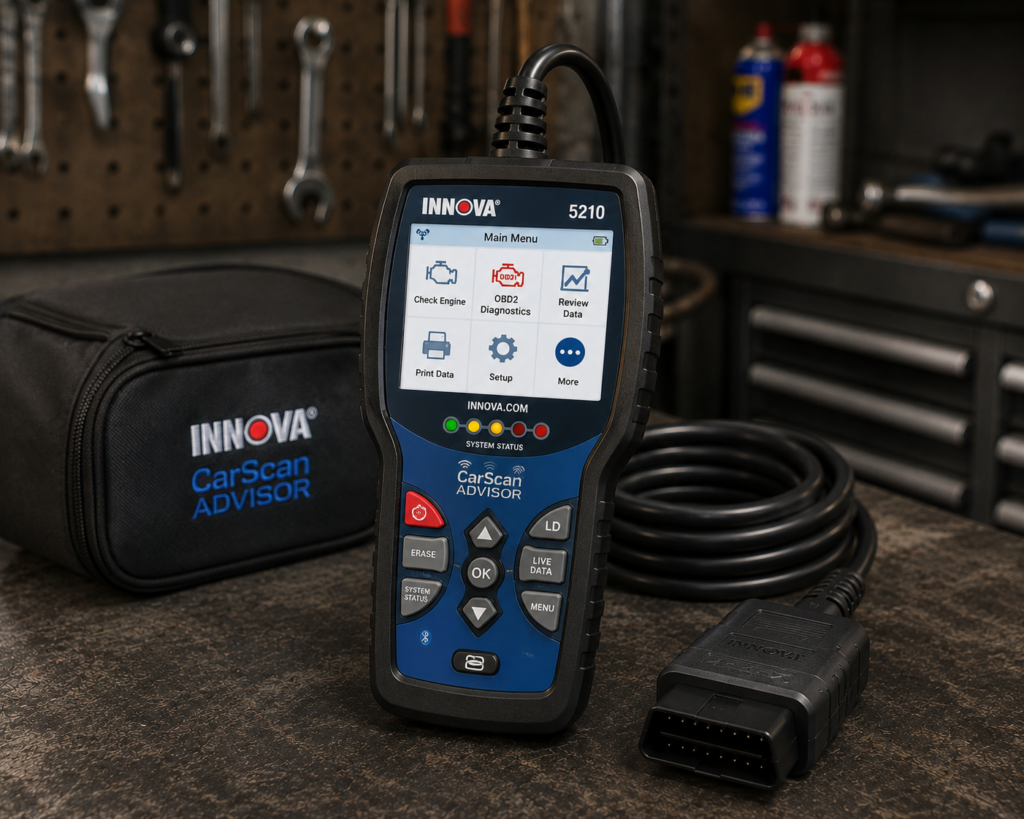
Innova currently calls the 5210 an entry-level OBD2 scanner and highlights Check Engine and ABS scanning.
That positioning is useful.
Some buyers need more than an engine-only reader but do not need the 5610’s all-system and bidirectional capability.
The 5210 provides a simpler step into enhanced diagnostics while retaining the physical handheld workflow.
Innova also emphasizes Code Priority and freeze-frame/Mode 6 information to help users organize the diagnostic process.
Where It Falls Short
The 5210 is not a full-system scanner.
Its ABS support and other enhanced functions remain vehicle-dependent.
Buyers who already know they need SRS, transmission or active tests should compare a higher diagnostic tier.
| Specification | Details |
|---|---|
| Form Factor | Handheld, 6 x 3.375 inches, built-in color display |
| Display | Shows 20 pieces of information at once, English/French/Spanish |
| Code Reading | Engine and ABS confirmed |
| Live Data | Confirmed, multiple systems simultaneously |
| Oil Reset | Confirmed, built-in feature per Innova’s current product page |
| Bidirectional Control | Not listed; positioned as an entry-level code reader |
| App Integration | RepairSolutions2, no extra fees per Innova |
| Vehicle Coverage | Most 1996+ cars, trucks, SUVs, hybrids |
| Pros | Cons |
|---|---|
| Standalone handheld | Bidirectional control is not supported |
| Check Engine diagnostics | |
| Supported ABS scans | |
| Code Priority | |
| Freeze-frame data | Coverage is limited to engine and ABS; SRS/airbag diagnostics are not included |
| Mode 6 information | |
| Simple beginner-oriented workflow | |
| No phone required for core scanning |
Best For
Drivers who want a simple standalone scanner but specifically need a step above engine-only OBD2.
SCG Verdict
5210 fills an important gap between basic readers and advanced scanners: a phone-free tool for owners whose first enhanced-system requirement is ABS. Our full Innova CarScan Advisor 5210 review covers exactly what that ABS-focused coverage includes.
7. Foxwell NT710: Best Brand-Specialist Standalone Scanner
Why We Picked It
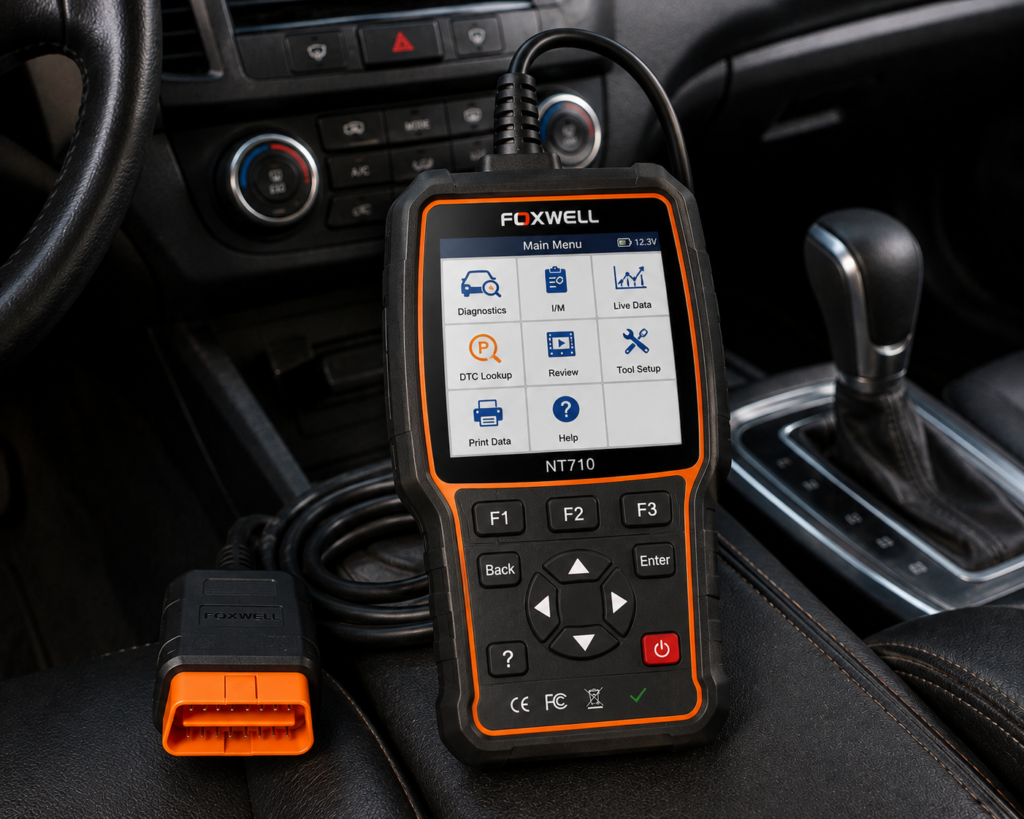
The Foxwell NT710 takes a different approach.
Rather than trying to provide the same advanced depth across every brand for one low purchase tier, the NT710 is built around manufacturer-specific software packages.
Foxwell currently lists all-system diagnostics, bidirectional active testing and lifetime free updates for the platform.
This can be attractive to an owner who maintains one primary brand and wants deeper standalone diagnostics without buying a broad multi-brand professional tablet.
Where It Falls Short
Brand/software selection is central to the purchase.
The NT710 should not be presented as automatically providing the same deep coverage across every manufacturer.
| Specification | Details |
|---|---|
| Vehicle Scope | GM-specific software variant: Buick, Chevrolet, GMC, Cadillac |
| Bidirectional Control | Confirmed; EVAP, ABS pump, windows, horn, injector active tests |
| Reset Functions | 34+ confirmed for this listing, including oil, battery, DPF, ABS bleed, injector, TPMS, throttle, basic IMMO |
| ECU Coding | Listed on Amazon; not listed by Foxwell (Foxwell’s blog says the general NT710 does not support coding) |
| Update Policy | Lifetime free updates confirmed for the general NT710 product line |
| Pros | Cons |
|---|---|
| Self-contained Android-based scanner | Easy to confuse with Foxwell's general-purpose NT710, which has different documented capabilities |
| All-system diagnostic positioning | |
| Bidirectional capability | |
| Brand-specialist model | |
| Lifetime free updates currently listed | |
| No personal phone required |
Best For
Owners and specialists who primarily work on one vehicle brand and want deeper standalone diagnostics.
SCG Verdict
NT710 is the specialist choice because diagnostic depth for the vehicle you actually own can be more valuable than shallow coverage across dozens of brands. See our full Foxwell NT710 review for the specifics of that single-brand diagnostic depth.
8. Autel AutoLink AL319: Best Simple Emissions Scanner
Why We Picked It
Not every standalone buyer needs enhanced diagnostics.
The AL319 exists for a much simpler job.
It is a dedicated OBD2 reader for engine/emissions-related work and is particularly easy to understand when I/M readiness and Check Engine diagnosis are the priorities.
The benefit is not advanced capability.
The benefit is independence.
No phone. No app. No pairing. No third-party software decision.
Where It Falls Short
The AL319 is a basic code-reader class tool.
Do not buy it for ABS, SRS, transmission, active tests or full-system work.
| Pros | Cons |
|---|---|
| Dedicated handheld | Basic diagnostic depth |
| Standard OBD2 workflow | |
| Check Engine diagnostics | |
| Emissions-readiness use case | |
| No smartphone | No broad ABS/SRS |
| No app | |
| Simple interface |
Best For
Drivers who primarily want a dedicated tool for Check Engine and emissions-readiness checks.
SCG Verdict
AL319 is included because simplicity is a valid buying objective. If the job is basic OBD2, there is no requirement to turn it into a phone-based workflow.
9. ANCEL FX2000: Best Traditional Four-System Alternative
Why We Picked It
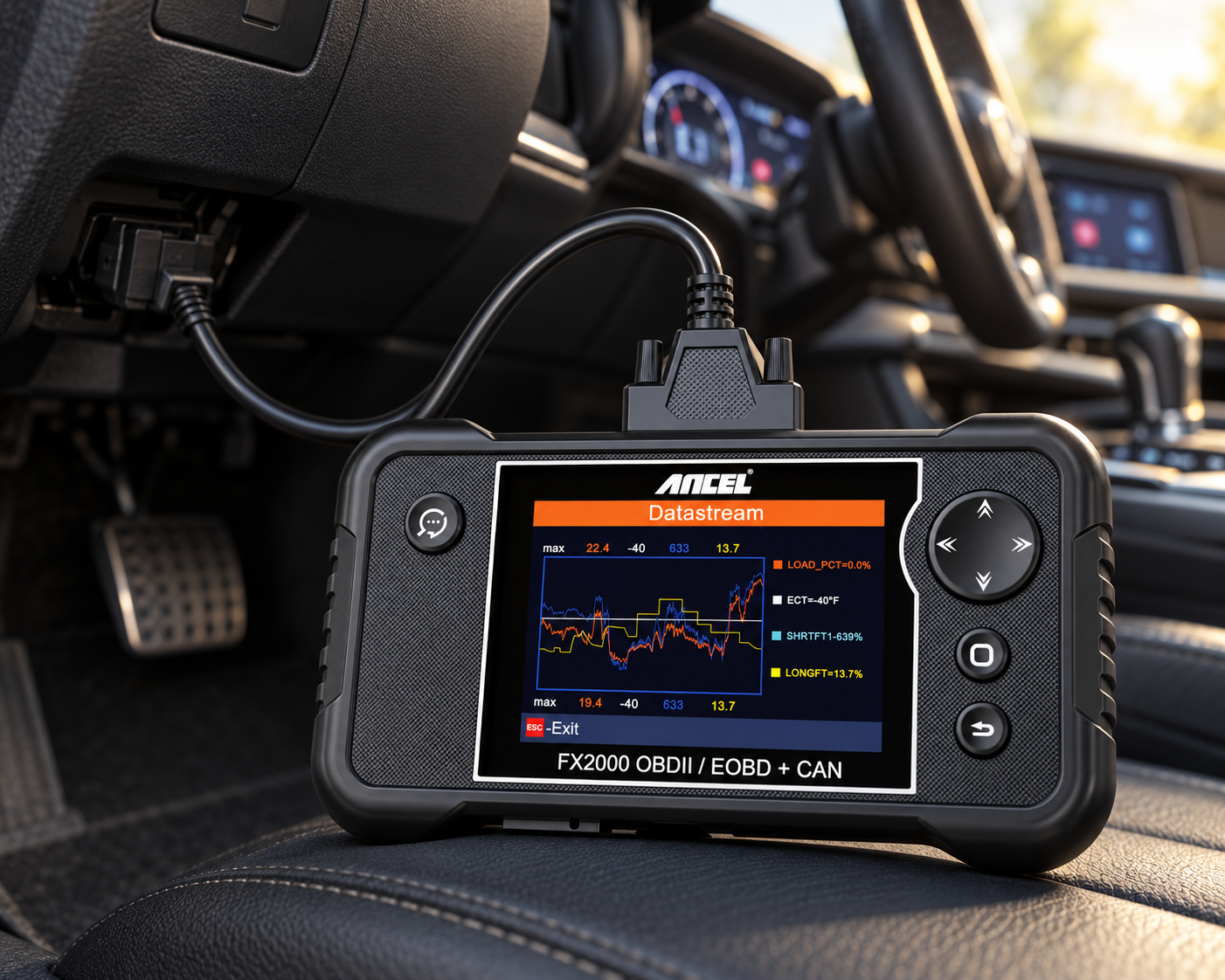
The FX2000 earns its spot on a standalone list for a simple reason: no app to pair, no phone battery to manage, just a built-in screen and a cable.
Its four-system positioning (engine, transmission, ABS and SRS) makes it relevant to owners who want meaningful enhanced diagnostics without using a phone.
The built-in display keeps the diagnostic workflow self-contained, and the scanner connects to the vehicle’s OBD2 port over a standard cable rather than Bluetooth or Wi-Fi.
That makes it a useful alternative to TOPDON for buyers who prefer ANCEL’s product ecosystem.
Where It Falls Short
This is a wired, corded scanner rather than a wireless one — buyers who specifically want Wi-Fi or Bluetooth connectivity should look elsewhere in this guide.
It is also not a broad professional active-test platform.
| Pros | Cons |
|---|---|
| Dedicated display | Four-system rather than full-system |
| Engine diagnostics | |
| Transmission diagnostics | |
| ABS diagnostics | |
| SRS diagnostics | Not broad bidirectional diagnostics |
| No personal phone required | |
| Traditional scanner workflow |
Best For
Owners who want a traditional four-system standalone scanner and prefer ANCEL over tablet or phone-based platforms.
SCG Verdict
FX2000 closes the list as a practical four-system alternative for buyers who want a simple, corded, no-subscription tool.
10. Autel ML629: Best Corded Four-System Code Reader
Why We Picked It
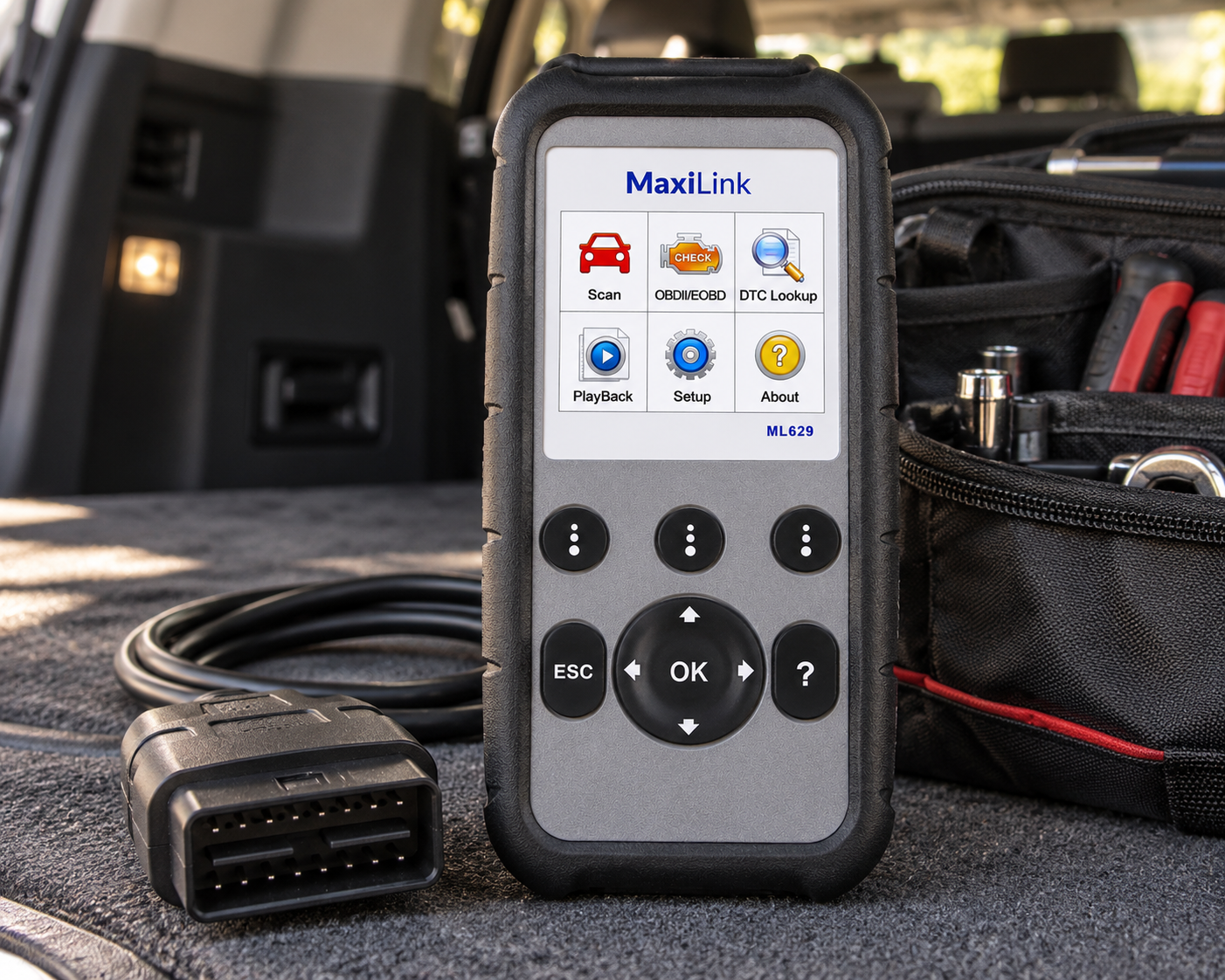
The ML629 is a strong fit for this guide because its capability is clearly defined by current Autel documentation.
Autel describes it as a corded four-system code reader with a 2.8-inch display.
It can read and erase supported diagnostic trouble codes from: Engine, Transmission, ABS, SRS.
Autel also confirms support for all 10 standard OBD2 test modes, live-data viewing, recording and playback, freeze-frame information and I/M readiness functions.
The important point for this article is that these functions are available through the scanner’s own display and controls.
A personal smartphone is not required for the core diagnostic workflow.
Where It Falls Short
ML629 is a four-system code reader, not an all-system professional platform.
Its Engine/Transmission/ABS/SRS access should not be expanded into claims about body modules, HVAC, TPMS, advanced coding or broad bidirectional control.
Exact enhanced-system coverage also varies by vehicle.
| Pros | Cons |
|---|---|
| Dedicated 2.8-inch display | Four-system rather than all-system |
| Corded standalone operation | |
| Engine diagnostics | |
| Transmission diagnostics | |
| ABS diagnostics | |
| SRS diagnostics | Enhanced coverage varies by vehicle |
| All 10 standard OBD2 test modes | |
| Live-data record/playback | |
| Freeze-frame information | |
| No smartphone required |
Best For
DIY owners who want a traditional, self-contained scanner with more diagnostic breadth than an engine-only code reader but do not need an Android tablet.
SCG Verdict
ML629 is one of the clearest step-up choices in the standalone category because its added diagnostic value is concrete: Engine, Transmission, ABS and SRS access in a dedicated handheld.
11. Innova 5310: Best Step-Up Innova Handheld
Why We Picked It
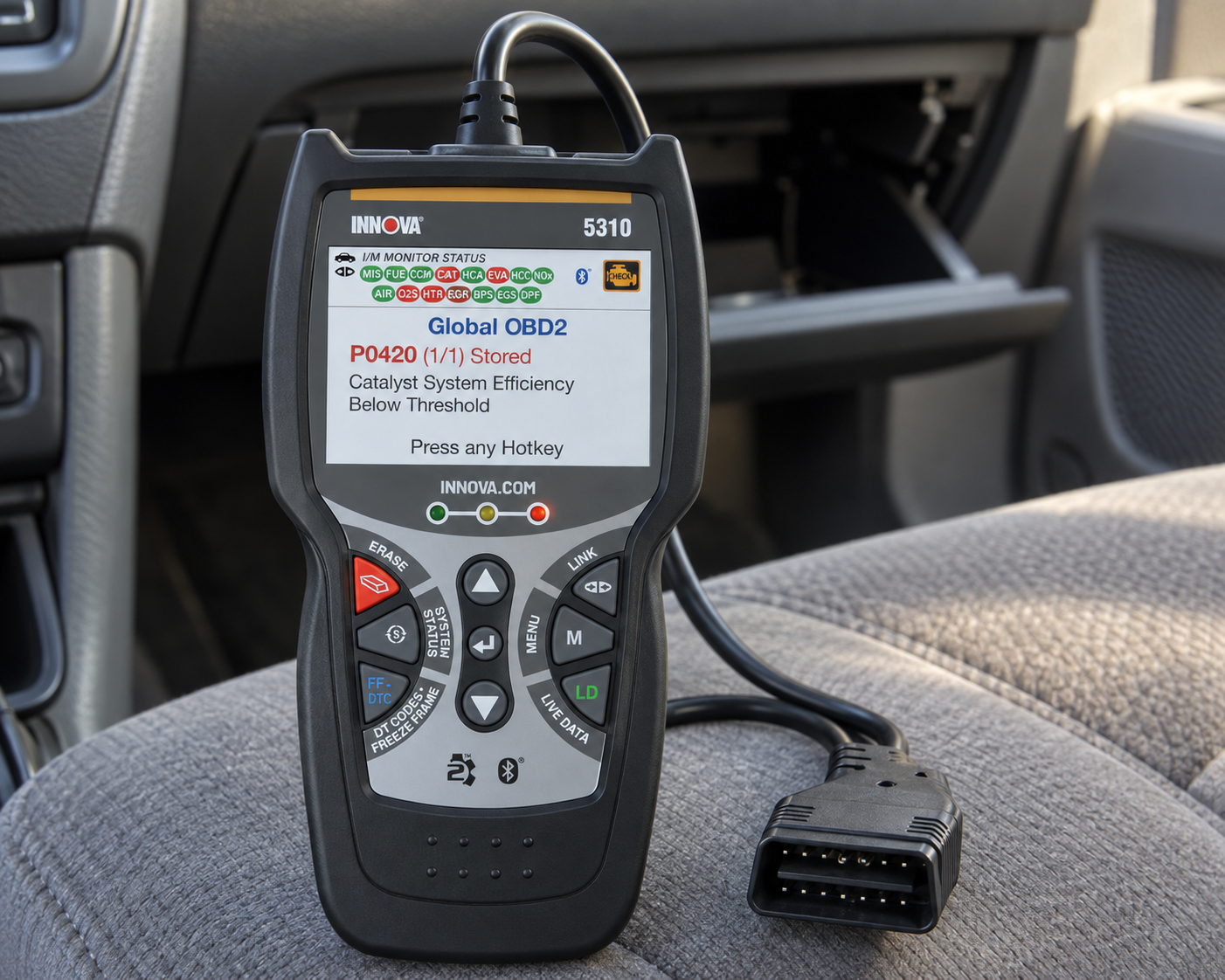
The Innova 5310 fills the gap between entry-level handheld diagnostics and the more advanced 5610.
Current Innova documentation shows that the 5310’s own scanner workflow includes Check Engine codes, ABS codes, SRS codes, live-data readings, graphing, freeze-frame information, Mode 6 and service checks/resets such as oil-light reset.
Innova also currently lists no subscriptions and no update fees for the 5310.
That makes it useful for an owner who likes Innova’s handheld approach but needs more diagnostic depth than a very basic code reader.
RepairSolutions2 is available as an additional ecosystem, but the diagnostic scanner itself remains the primary standalone hardware.
Where It Falls Short
The 5310 should not be treated as a smaller 5610 with identical capability.
Innova’s product tiers are different.
It does not support vehicle-computer reprogramming, and Innova states that its handheld scanners have limitations on 2018+ FCA vehicles requiring AutoAuth access.
Exact enhanced functions remain vehicle-dependent.
| Pros | Cons |
|---|---|
| Dedicated handheld scanner | Enhanced coverage varies by vehicle |
| Check Engine diagnostics | |
| Supported ABS diagnostics | |
| Supported SRS diagnostics | |
| Live data and graphing | |
| Freeze-frame data | |
| Mode 6 | FCA secure-gateway limitations can matter |
| Service checks/resets | |
| No subscriptions currently stated | |
| No update fees currently stated | |
| No phone required for the core scanner workflow |
Best For
DIY owners who want more capability than an entry-level Innova handheld but do not need the 5610’s higher diagnostic tier.
SCG Verdict
The 5310 gives this list a logical middle Innova tier: still self-contained and easy to own, but with enough enhanced diagnostics to justify stepping above a basic Check Engine reader.
Standalone Does Not Mean Wired Only
A standalone scanner is defined here by user independence from a personal phone.
Some standalone devices communicate with the vehicle through a physical cable. Others may contain Wi-Fi for software updates or internal connectivity.
The key point is: you do not need to supply your own phone as the scanner’s primary screen and interface.
Do Standalone Scanners Need Internet?
Usually not for every core diagnostic operation.
But internet access can still be needed for: software updates, account services, cloud reports, secure-gateway authentication, online technical functions.
Phone independence and internet independence are different things.
Standalone vs. Bluetooth Phone Scanner
Standalone advantages: dedicated hardware, predictable interface, no phone pairing, no personal-phone battery use, no app-shopping decision, easier to leave in garage/vehicle, physical buttons on many handhelds.
Bluetooth phone advantages: smaller hardware, larger/familiar phone display, flexible app ecosystem, custom dashboards, easy data sharing, often lower entry cost.
Neither format is universally better.
Best Bluetooth OBD2 Scanners in 2026
Standalone Handheld vs. Dedicated Wireless Tablet
These are also different categories.
A traditional standalone handheld is usually: smaller, simpler, often wired, easier to store, focused on a narrower diagnostic tier.
A dedicated wireless tablet is usually: larger, more powerful, paired with a wireless VCI, better for extensive live data and active tests, closer to professional workflow.
Best Wireless Diagnostic Scanners With Dedicated Tablets in 2026
How Much Diagnostic Depth Do You Need?
Level 1: Basic OBD2
Typical fit: Foxwell NT301, Autel AL319. Use when you need Check Engine codes, I/M readiness, freeze frame and engine live data.
Level 2: Enhanced ABS/SRS
Typical fit: Autel AL619, Innova 5210. Use when you need ABS codes, SRS codes where supported, and more than engine-only diagnosis.
Level 3: Four-System / Service
Typical fit: TOPDON ArtiDiag600 S, ANCEL FX2000, Autel MaxiCheck Pro. Use when you need engine, transmission, ABS, SRS and selected maintenance/service procedures.
Level 4: Advanced Standalone
Typical fit: Innova 5610, Foxwell NT710. Use when you need broader system access, supported active tests and more advanced DIY diagnostics.
Why a Built-In Screen Can Still Matter in 2026
Phones have excellent displays. That does not make dedicated diagnostic hardware obsolete.
A scanner can be dirty, dropped, left in a toolbox, used with gloves, loaned to another person, kept in a vehicle, or used while the owner’s phone is elsewhere.
For some buyers, that separation is worth more than having another app.
Why Market Popularity Matters Here
Current 2026 search results repeatedly surface Foxwell NT301 and Innova 5610 specifically as strong phone-free handheld options.
That is useful commercial evidence.
It tells SCG that “no phone” is not merely an artificial content angle. Real buyers and current competitor guides distinguish these products partly by hardware workflow.
However, market popularity remains supporting evidence.
It does not make an engine-only NT301 technically better than an all-system 5610.
They serve different buyers.
Common Buying Mistakes
Mistake 1: Assuming Built-In Screen Means Full-System
It does not.
Mistake 2: Buying a Basic Reader for an ABS Light
Generic OBD2 may not access the ABS module.
Mistake 3: Buying an Advanced Scanner Just to Avoid a Phone
Phone independence alone does not justify professional diagnostic depth.
Mistake 4: Ignoring Vehicle Coverage
Enhanced diagnostics remain vehicle-dependent.
Mistake 5: Confusing Wi-Fi With Phone Dependency
A scanner can use Wi-Fi for updates and still operate as a standalone diagnostic device.
Mistake 6: Assuming an App Is Always Required
Products in this guide perform their core scanner functions on their own hardware.
Mistake 7: Ignoring Update Policy
Standalone scanners still depend on software.
Mistake 8: Confusing Similar Model Versions
Exact model identity remains mandatory.
Our Final Recommendations
For advanced North American DIY diagnostics without requiring a personal phone, Innova 5610 is our overall choice.
For basic Check Engine work, Foxwell NT301 is the budget standalone benchmark.
For ABS and SRS diagnosis, Autel AL619 provides a focused step up.
For engine, transmission, ABS and SRS plus useful maintenance functions, TOPDON ArtiDiag600 S is the four-system choice.
For brake and maintenance-service work, Autel MaxiCheck Pro offers a specialized standalone workflow.
For entry-level ABS diagnostics, Innova 5210 is a simpler alternative.
For brand-focused deeper diagnostics, Foxwell NT710 offers a different ownership model.
For straightforward emissions work, Autel AL319 remains easy to understand.
ANCEL FX2000 provides another traditional four-system route pending exact current version verification.
Autel ML629 adds a well-documented corded four-system option for Engine, Transmission, ABS and SRS diagnostics.
And Innova 5310 provides a useful middle step for buyers who want more enhanced handheld capability without moving all the way to the 5610.
The common thread is not capability.
It is independence from your personal phone.
Choose the diagnostic level first. Then choose the standalone tool that delivers it.
Quick Picks
Best Overall Standalone Scanner: Innova 5610
A self-contained North American-focused handheld with all-system diagnostics and supported bidirectional controls, without requiring a phone for core scanning.
Best Budget Standalone Scanner: Foxwell NT301
A simple dedicated color-screen code reader for Check Engine diagnostics, live data and emissions readiness.
Best for ABS and SRS: Autel AutoLink AL619
A focused dedicated scanner that adds supported ABS and airbag/SRS diagnostics to full standard OBD2 functions.
Best Four-System Standalone Scanner: TOPDON ArtiDiag600 S
A 5-inch independent scanner covering engine, transmission, ABS and SRS, plus nine service functions and current lifetime updates.
Best for Brake and Service Work: Autel MaxiCheck Pro
A self-contained service-oriented scanner with ABS, SRS, EPB, oil, BMS, DPF and related supported functions.
Best Entry-Level ABS Choice: Innova 5210
A straightforward handheld aimed at owners who want engine plus supported ABS diagnostics without moving to an advanced tablet.
Best Brand-Specialist Standalone Scanner: Foxwell NT710
A self-contained Android-based scanner with all-system diagnostics and bidirectional capability for a selected vehicle-brand software package.
Best Simple Emissions Scanner: Autel AutoLink AL319
A dedicated plug-in reader for drivers whose main requirements are Check Engine codes and emissions-readiness information.
Best Traditional Four-System Alternative: ANCEL FX2000
A dedicated-screen engine/transmission/ABS/SRS scanner for buyers who want a traditional scanner workflow without phone dependency.
Best Corded Four-System Code Reader: Autel ML629
A dedicated 2.8-inch handheld that reads and clears supported Engine, Transmission, ABS and SRS codes and covers all 10 standard OBD2 test modes.
Best Step-Up Innova Handheld: Innova 5310
A self-contained handheld that adds supported ABS and SRS diagnostics, live-data functions and service checks/resets while keeping the core workflow independent of a phone.
Frequently Asked Questions
What is the best OBD2 scanner that doesn’t require a phone in 2026?
For advanced DIY work, SCG’s current overall choice is Innova 5610. For basic engine/Check Engine diagnostics, Foxwell NT301 is the simpler and more appropriate choice.
Can I use Innova 5610 without a smartphone?
Yes for its core scanner workflow. Innova also offers the RepairSolutions2 ecosystem, but the 5610 itself is a standalone handheld diagnostic scanner.
What is the best cheap scanner without an app?
Foxwell NT301 is our budget choice for buyers who want a self-contained engine/emissions OBD2 scanner.
Do standalone scanners read ABS codes?
Some do. Autel AL619, Innova 5210, ArtiDiag600 S and other enhanced scanners in this guide provide supported ABS access. Basic OBD2 readers such as NT301 should not be assumed to do so.
Can a standalone scanner be bidirectional?
Yes. Innova 5610 and Foxwell NT710 provide supported bidirectional capability. Standalone describes hardware workflow, not diagnostic limitation.
Does a scanner with Wi-Fi still count as standalone?
Yes, if the scanner performs its core diagnostic work on its own hardware and does not require your personal phone as the interface.
Should I buy a standalone scanner or Bluetooth adapter?
Choose standalone for simplicity, dedicated hardware and phone independence. Choose Bluetooth when compact size, app flexibility and phone-based dashboards are more important.
Are standalone scanners obsolete?
No. Current 2026 buying guides continue to recommend dedicated handhelds such as Innova 5610 and Foxwell NT301 because many users prefer a purpose-built diagnostic tool.
Bottom Line
You do not need to diagnose your car through a phone.
For some buyers, a Bluetooth adapter is ideal.
For others, the best scanner is the one that lives in the toolbox, has its own screen and is ready when the car needs diagnosis.
Foxwell NT301 handles the basic end of that spectrum.
Autel AL619 and Innova 5210 add enhanced safety-system access.
TOPDON ArtiDiag600 S and ANCEL FX2000 move into four-system diagnostics.
Autel MaxiCheck Pro targets service work.
Autel ML629 adds another strong four-system corded option, while Innova 5310 fills the middle of Innova’s standalone range.
And Innova 5610 and Foxwell NT710 show how far a self-contained scanner can go.
Phone independence is not a diagnostic specification.
It is a workflow choice.
Make that choice only after you know what the scanner actually needs to diagnose.