Knowledge Hub
OBD2 vs OBD1: What Is the Difference and Does It Matter?

If you’re shopping for your first scanner, you’ll see “OBD2” everywhere and “OBD1” almost nowhere, and that’s not an accident. Here’s what the distinction actually is, and why it decides whether a scanner will work on your car at all.
The Short Version
OBD stands for On-Board Diagnostics: the standardized system your car uses to monitor its own systems and report problems. OBD2 is the second, standardized generation of that system. OBD1 was the earlier, manufacturer-specific generation that came before standardization. If your vehicle is a 1996 model year or newer, it almost certainly uses OBD2. Anything older is a separate question, one that a modern OBD2 scanner generally cannot answer.
What OBD1 Actually Was
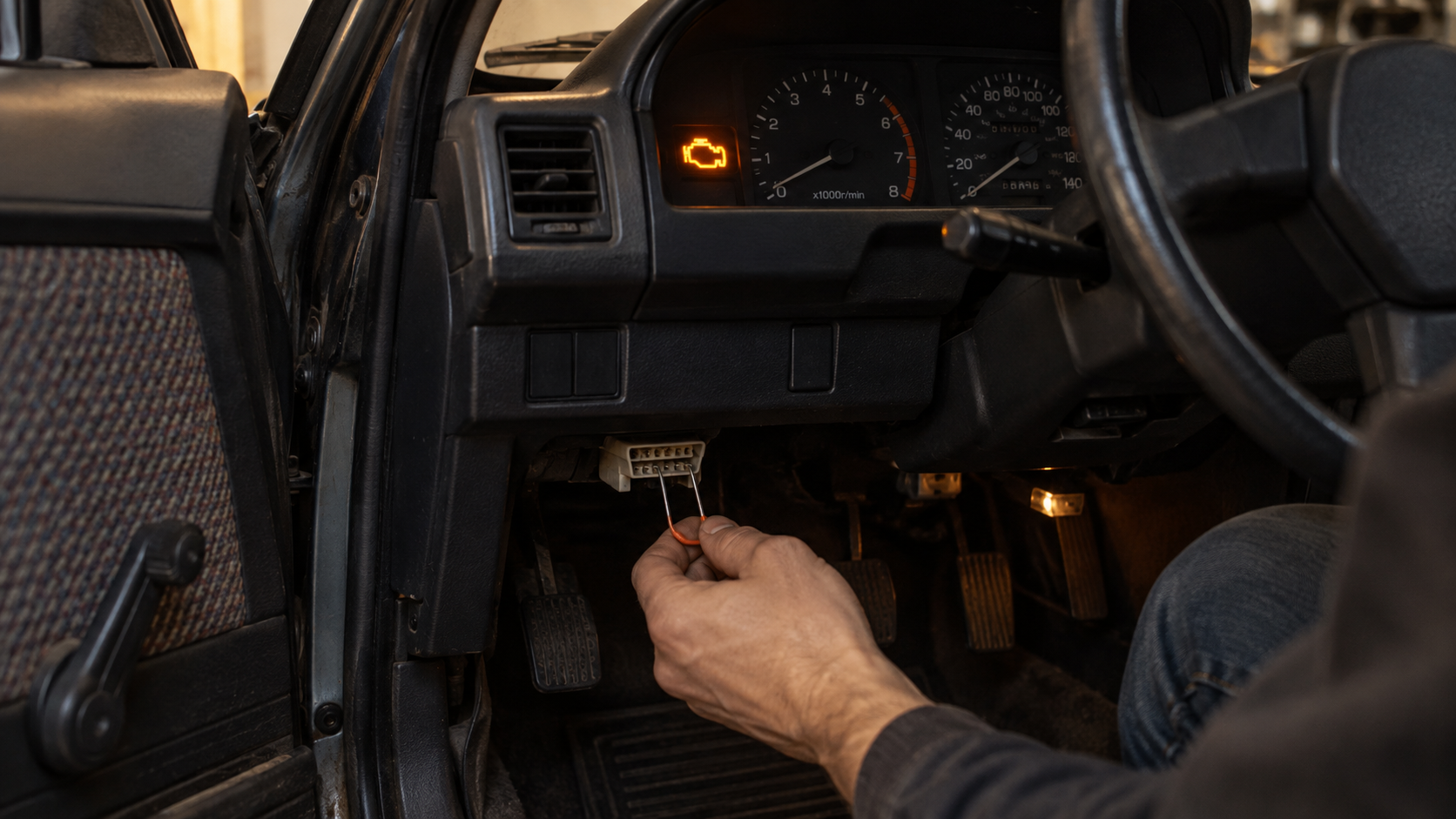
Before OBD2, “on-board diagnostics” existed, but every manufacturer built its own version. Ford, GM, Chrysler, and import brands each used their own connector shape, their own wiring, their own trouble code numbering, and often their own diagnostic tool. A tool built to read GM’s system generally could not read a Ford, and it usually could not read a different GM model from a different era either, since even one manufacturer’s approach changed over time.
Some OBD1 systems did not use a plug-in scan tool at all in the way drivers think of one today. Several manufacturers implemented “blink codes”: you would ground a specific terminal or use a jumper wire, and the check-engine light (or a dedicated dashboard light) would flash a pattern you counted by hand to identify the code. It worked, but it was slow, manufacturer-specific, and easy to misread.
Because there was no shared standard, aftermarket scan tool makers had to reverse-engineer or license each manufacturer’s protocol separately. That is a large part of why professional-grade OBD1 tools were expensive, and why OBD1 coverage was always incomplete compared to what a single OBD2 scanner can do today.
Why the Cutoff Date Matters
In the United States, OBD2 became mandatory for gasoline passenger vehicles and light trucks starting with the 1996 model year. (Diesel vehicles and some other categories moved to OBD2 requirements on a different, later timeline, and markets outside the US have their own standards and adoption dates.) A handful of manufacturers began phasing in OBD2-compliant systems slightly before the mandate took full effect, which is why “1996 and newer” is treated as a reliable baseline rather than an absolute rule for every single vehicle.
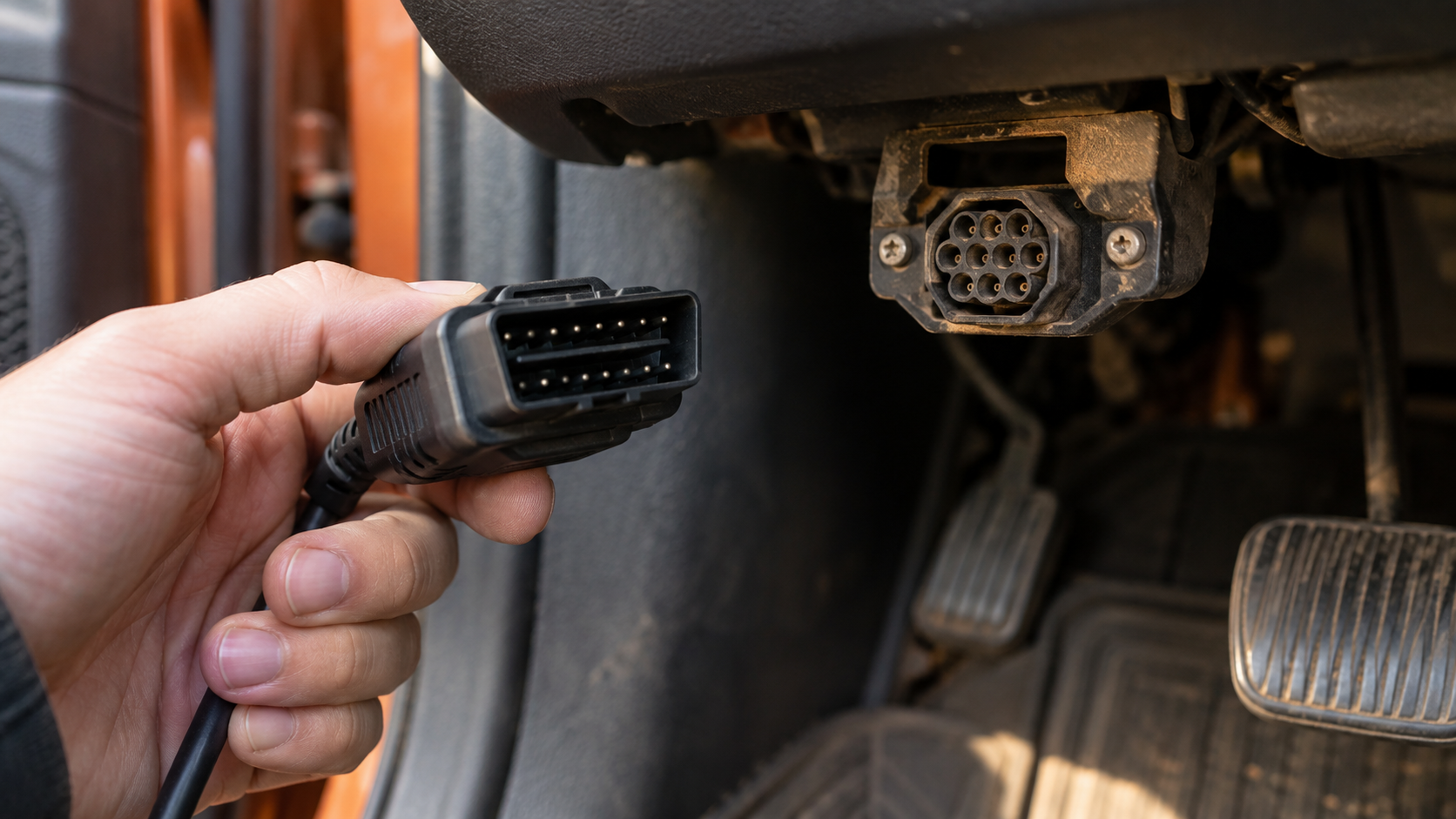
Before the mandate, each manufacturer, and sometimes each model, used its own proprietary diagnostic connector and protocol. OBD2 changed that by standardizing several things at once: a single 16-pin connector shape and location, defined by SAE J1962 and almost always reachable from the driver’s seat without tools; a small set of shared communication protocols that a scanner can detect automatically; and a trouble code format that means the same thing across every manufacturer for the codes considered generic. That standardization is exactly why a single scanner can work across Ford, Toyota, BMW, and dozens of other brands today, something that was simply not possible under OBD1.
What OBD2 Actually Standardized
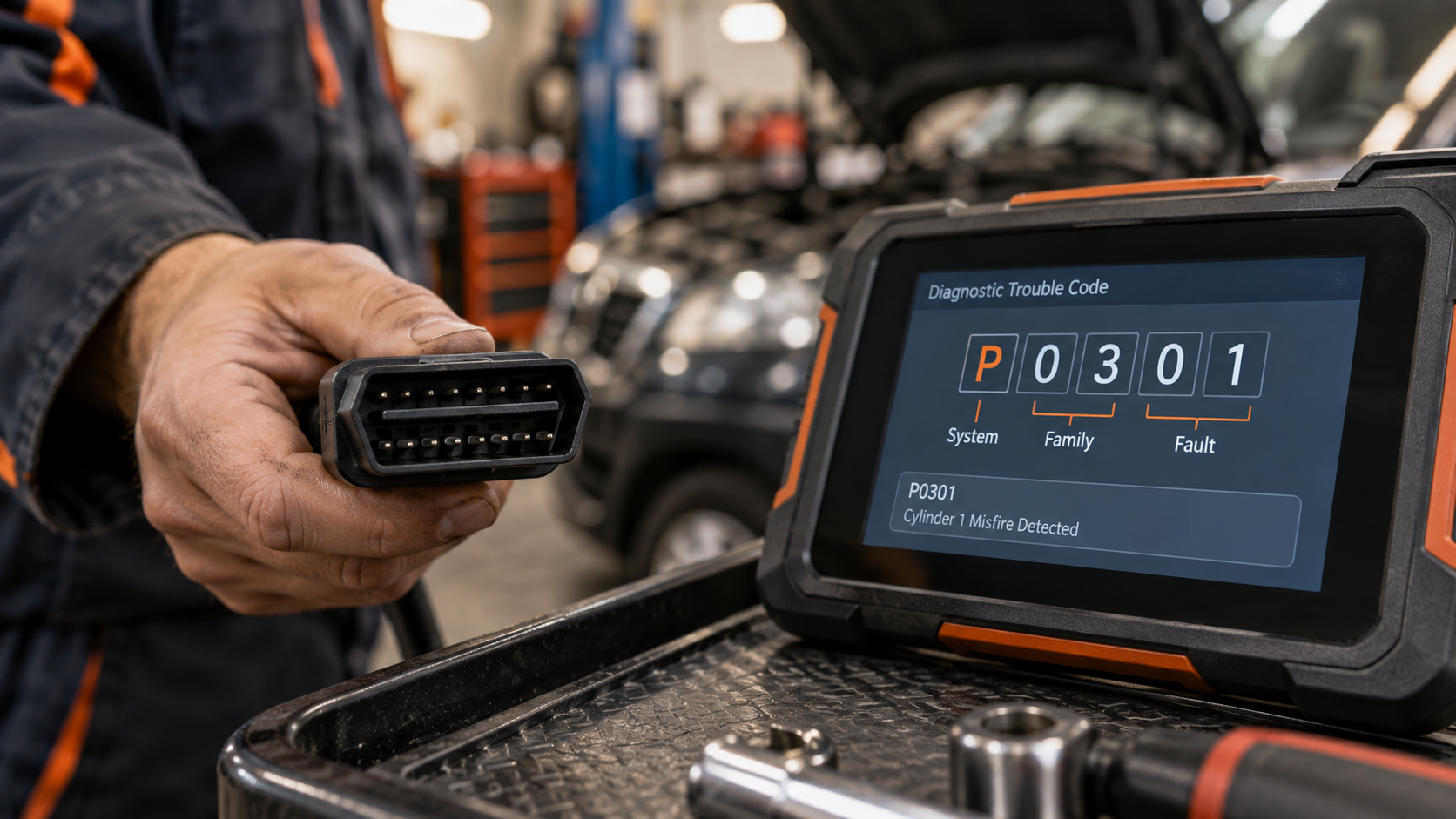
It helps to be specific about what “standardized” means here, since OBD2 did not eliminate manufacturer differences entirely. It built a common layer underneath them.
- The connector. Every OBD2 vehicle uses the same 16-pin, trapezoid-shaped connector in roughly the same location, so any compliant scanner physically plugs into any compliant vehicle.
- The trouble code format. OBD2 codes follow a consistent structure: a letter for the system (P for powertrain, B for body, C for chassis, U for network), followed by a number. Codes starting with P0 are generic, defined by the standard and shared across manufacturers. Codes starting with P1 and higher are manufacturer-specific extensions built on top of the same format. See Generic vs Manufacturer-Specific OBD2 Codes for the full breakdown.
- The communication protocols. Early OBD2 vehicles used one of a small number of standardized protocols, depending on the manufacturer (SAE J1850 PWM, SAE J1850 VPW, or ISO 9141-2/ISO 14230). Since model year 2008, all vehicles sold in the US have been required to use CAN (ISO 15765), which is now the dominant protocol a modern scanner expects. A compliant scanner detects which protocol a given vehicle uses automatically, so you don’t need to know this in advance to use one.
- A shared set of diagnostic modes. OBD2 defines a fixed set of “modes” a scanner can request, like current live data, stored trouble codes, or freeze-frame data captured at the moment a fault occurred. Every OBD2 vehicle responds to these modes the same way. See The 10 OBD2 Modes Explained for what each one does.
None of this existed in a shared form under OBD1. Each manufacturer decided its own connector, its own codes, and its own communication method, which is exactly why OBD1 tools could not cross manufacturer lines the way OBD2 tools do now.
Why OBD2 Exists in the First Place
OBD2 wasn’t created purely as a convenience for repair shops. It was driven substantially by emissions regulation. Environmental regulators in the US, at both the federal and California state level, needed a reliable way to confirm that a vehicle’s emissions-control systems were actually working, not just at the factory, but throughout the vehicle’s life on the road. A standardized diagnostic system made that possible: instead of every manufacturer reporting emissions health in its own format, every vehicle could be checked the same way, using the same connector and the same core set of monitors.
That regulatory root is still visible today in how OBD2 vehicles behave. Readiness monitors, the self-tests a vehicle’s emissions systems run to confirm they’re functioning correctly, exist specifically so an inspector (or a scanner) can confirm emissions readiness without a physical tailpipe test in many states. This is also why clearing a trouble code resets those monitors and can affect whether a vehicle passes inspection soon afterward, a topic covered in more detail in our guide on what to do after your scanner finds a trouble code.
OBD1 never had this kind of unified regulatory purpose behind it. It existed primarily as an internal manufacturer diagnostic tool, built to help that manufacturer’s own technicians troubleshoot that manufacturer’s own vehicles, which is a large part of why there was never strong pressure to standardize it across the industry until regulators required it.
What This Means When You’re Buying a Scanner
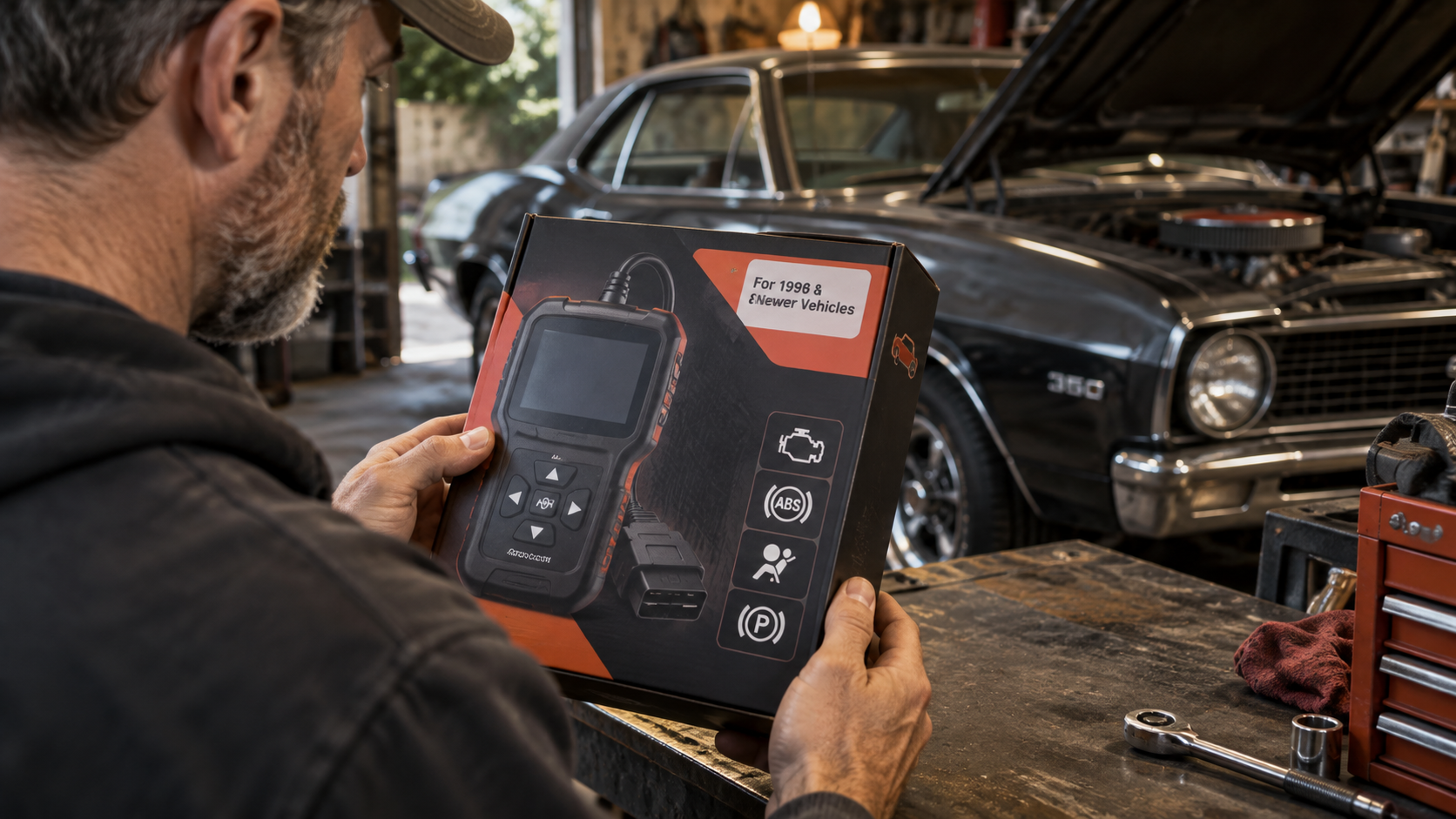
Virtually every scanner sold today, including everything we review, is an OBD2 tool built for 1996-and-newer vehicles. If you’re working on something older than that, you need an OBD1-specific tool, or a scanner with genuine OBD1 adapter support, which is rare and worth confirming directly with the manufacturer rather than assuming it from the box copy. Don’t assume a scanner “just works” on a pre-1996 vehicle because the seller doesn’t mention a restriction. Verify it.
OBD1 tools are also a shrinking market. Because OBD1 vehicles are aging out of daily use and manufacturers stopped actively supporting their old proprietary systems long ago, dedicated OBD1 scan tools are harder to find, often more expensive relative to what they do, and typically limited to a single brand or a small family of models rather than broad coverage.
Manufacturer-Specific Codes Still Exist Within OBD2
Standardization covers the core system, but manufacturers still add their own extended codes and functions on top of the OBD2 baseline. That’s why some scanners advertise “enhanced” or “manufacturer-specific” code support as a separate feature from basic OBD2 compliance. A scanner that only reads generic OBD2 codes will still catch a check-engine light, but it may miss brand-specific fault codes on ABS, SRS, or transmission systems that a more capable scanner picks up. This is a different question from the OBD1/OBD2 divide. It’s not about which generation your vehicle uses, it’s about how much of that vehicle’s full diagnostic capability a specific scanner can reach.
How to Tell Whether Your Vehicle Is OBD1 or OBD2
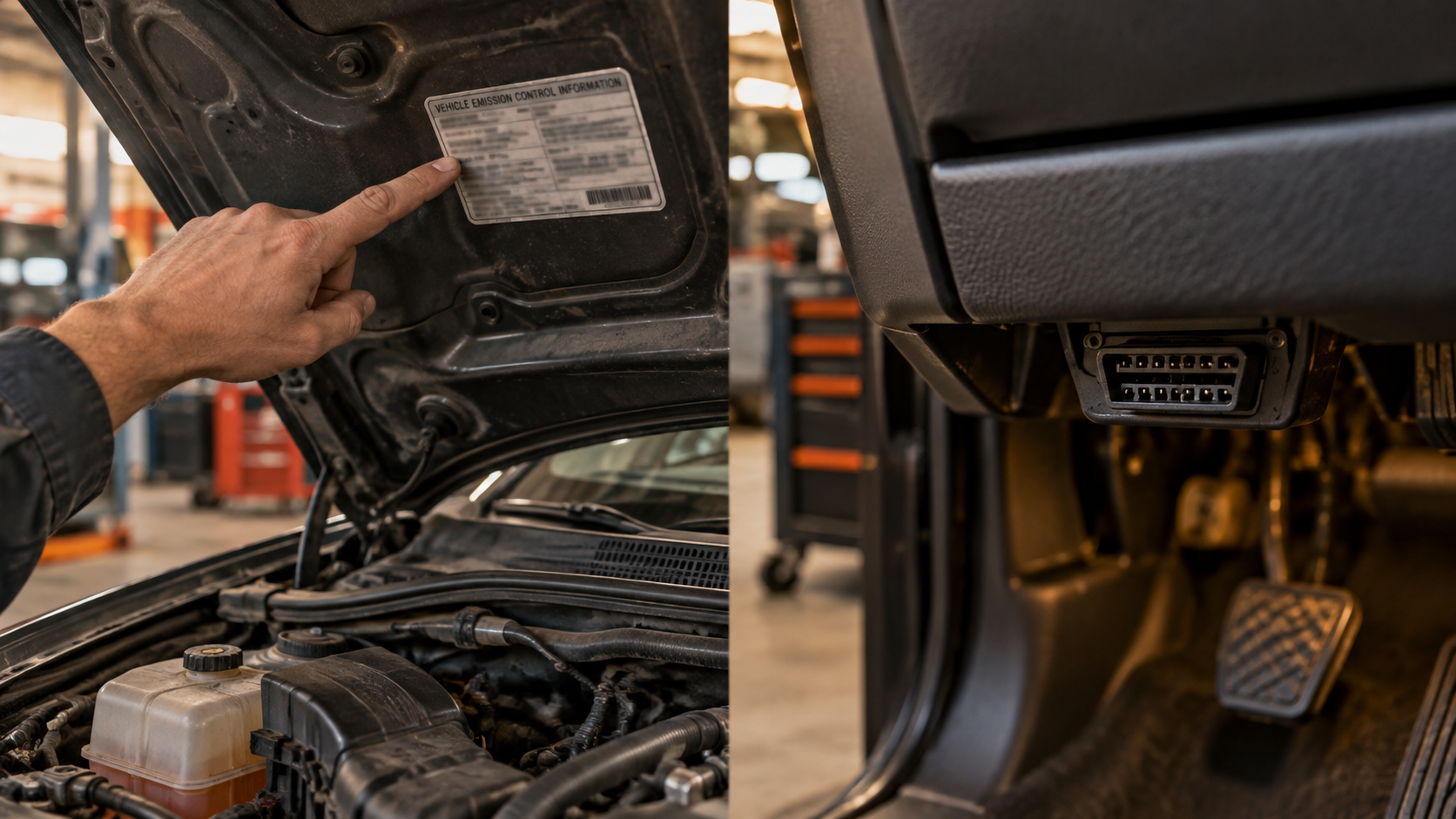
The 1996-model-year rule covers the vast majority of cases for gasoline vehicles sold in the US, but there are more reliable ways to confirm it for a specific car:
- Check the emissions compliance label under the hood. US vehicles carry a Vehicle Emission Control Information (VECI) sticker, usually on the underside of the hood or near the engine bay, and OBD2-compliant vehicles typically state that compliance directly on the label.
- Look at the diagnostic connector itself. An OBD2 connector is a standardized 16-pin trapezoid shape in a driver-accessible location. If what you find looks different, is in an unusual location, or has a different pin count, that’s a strong sign you’re dealing with an OBD1 (or other non-standard) system.
- Check your specific model year against your manufacturer’s own documentation if your vehicle falls right around the 1994 to 1996 transition window, since a small number of models were compliant slightly earlier or later than the general rule.
Common Mistakes
Mistake 1: Assuming “older car” automatically means OBD1. The transition happened over a couple of model years, not overnight. Check the specific vehicle rather than assuming from age alone.
Mistake 2: Assuming any 16-pin connector guarantees OBD2 compatibility. A handful of pre-1996 vehicles used connectors that resemble the OBD2 shape without actually running the standardized protocol underneath. Physical shape is a clue, not proof.
Mistake 3: Buying an OBD2 scanner for a pre-1996 vehicle and hoping it will work anyway. Without genuine OBD1 support, it generally will not connect at all, not just miss some functions.
Mistake 4: Confusing “OBD1 vs OBD2” with “generic vs manufacturer-specific codes.” These are two different questions. The first is about which vehicle generation you have. The second is about how much of an OBD2 vehicle’s full diagnostic range a given scanner can reach.
FAQ
Can I use an OBD2 scanner on an OBD1 car?
Generally, no. OBD1 vehicles use different connectors and communication protocols than OBD2 defines, so a standard OBD2 scanner will not connect. You need a scanner with genuine, confirmed OBD1 support for your specific manufacturer.
How do I know if my car is OBD1 or OBD2?
Model year is the fastest check: 1996 and newer is almost always OBD2 for US gasoline vehicles. For certainty on a specific vehicle, check the emissions compliance label under the hood or confirm with your manufacturer.
Is there an adapter that lets an OBD2 scanner read an OBD1 vehicle?
Not as a simple cable adapter. OBD1 systems vary by manufacturer at the protocol level, not just the connector, so bridging them takes purpose-built OBD1 hardware and software, not a passive adapter.
Are all 1996-and-newer vehicles definitely OBD2?
For gasoline passenger vehicles and light trucks sold in the US, yes, as a practical rule. Diesel vehicles and some other categories moved to OBD2 on a different timeline, so confirm those separately.
Does OBD2 mean every scanner reads everything on my car?
No. OBD2 standardizes the connector, the core protocols, and the generic code set, but manufacturers still add their own enhanced codes and functions on top of that. A basic scanner and a more advanced scanner can both be genuinely OBD2 compliant while covering very different amounts of your vehicle’s full diagnostic range.
Why did manufacturers use different systems before OBD2?
There was no federal requirement forcing a shared standard before OBD2 was mandated, so each manufacturer built its own diagnostic approach independently, optimized for its own vehicles rather than for cross-brand compatibility.
The Bottom Line
OBD1 and OBD2 are not two versions of the same tool. They are two fundamentally different approaches. OBD1 was manufacturer-specific, inconsistent, and often required brand-specific tools or even manual blink-code counting. OBD2 standardized the connector, the core communication protocols, and the generic trouble code format across every manufacturer, which is why a single modern scanner can work across nearly any 1996-or-newer vehicle. If you’re shopping for a scanner today, the practical takeaway is simple: confirm your vehicle is 1996 or newer, or verify OBD2 compliance directly if you’re near that line, and every OBD2 scanner we review will be built for exactly that generation of vehicle.
To understand what an OBD2 scanner actually does once it’s connected, read What Is OBD2 and How Does an OBD2 Scanner Work?
For the difference between the codes every scanner can read and the ones only some scanners reach, see Generic vs Manufacturer-Specific OBD2 Codes.
Before buying, confirm your specific vehicle and needs against Will Any OBD2 Scanner Work With My Car? OBD2 Compatibility Explained.
Looking for a scanner for 1996-and-newer vehicles? See the Best OBD2 Scanners.