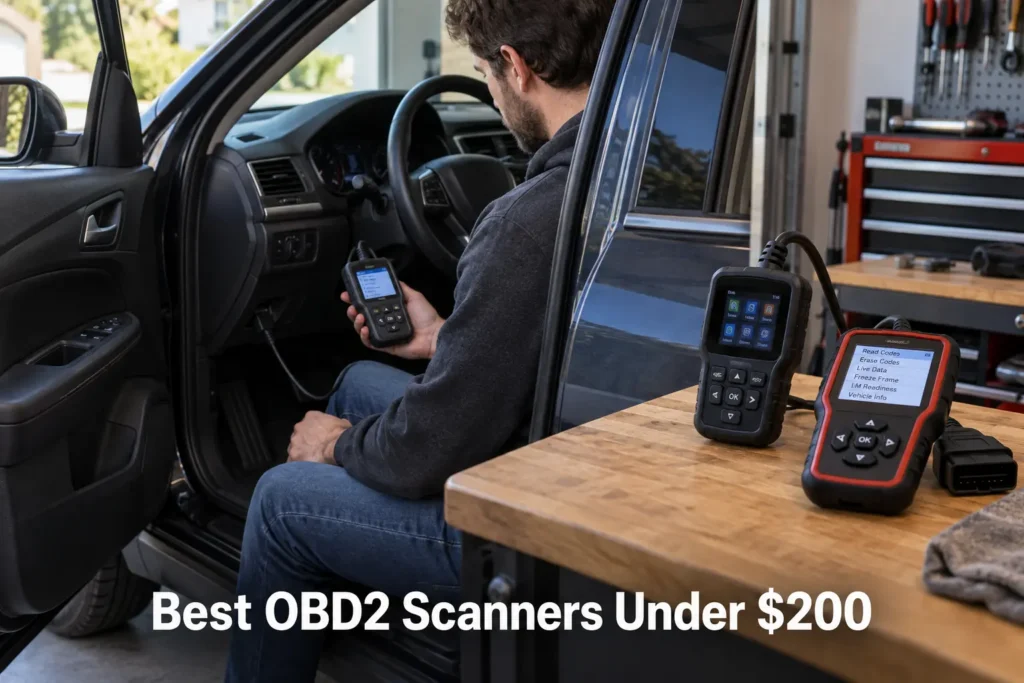
9 Best OBD2 Scanners Under $100 in 2026: Budget Diagnostic Tools That Are Actually Worth Buying
You do not need an expensive professional scan tool to understand every Check Engine light.
For many drivers and DIY owners, a scanner under $100 can handle the jobs that matter most: read and clear generic OBD2 trouble codes, check emissions readiness, view freeze-frame information and inspect live engine data.
But the under-$100 market is also one of the easiest places to buy the wrong tool.
Some scanners are simple wired code readers. Others are Bluetooth adapters whose real capability depends on the app you pair with them. Some provide enhanced manufacturer diagnostics. Others remain strictly within generic OBD2. A few products advertise advanced features that apply only to selected vehicles, apps or paid software.
For this guide, Scan Choice Guide focused on a practical question: which OBD2 scanners under the $100 market ceiling make the most sense for different types of buyers in 2026?
We evaluated current market position, manufacturer-documented capability, Google/SERP presence, current U.S. commercial relevance, hardware format, app dependency, live-data usefulness, update model and buyer fit.
This guide does not publish a fixed Amazon price for any individual scanner.
Our recommendations are based on current manufacturer documentation, current 2026 market research and SCG comparative analysis. The results we present come from our own research into manufacturer documentation, Amazon listings, and compatibility data.
Our Top Picks for Scanners Under $100
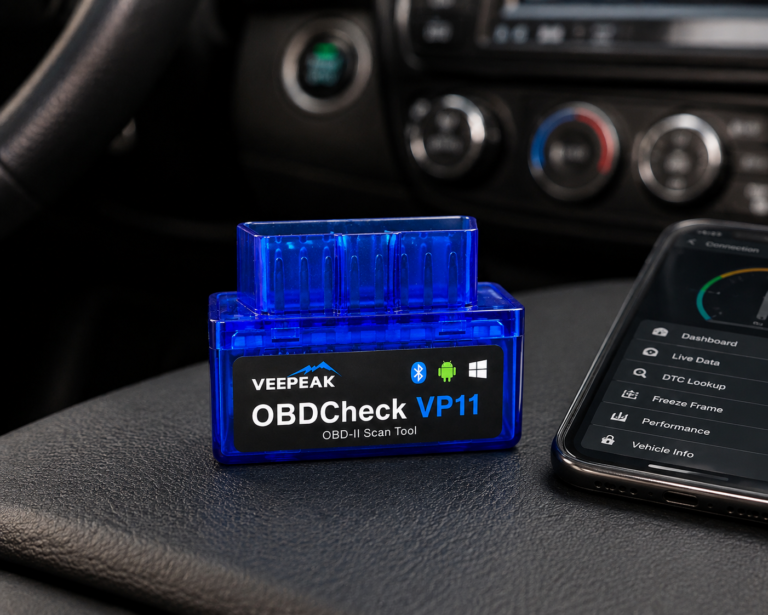
Veepeak OBDCheck VP11
- Dedicated wired format
- No smartphone required
- Simple generic OBD2 use
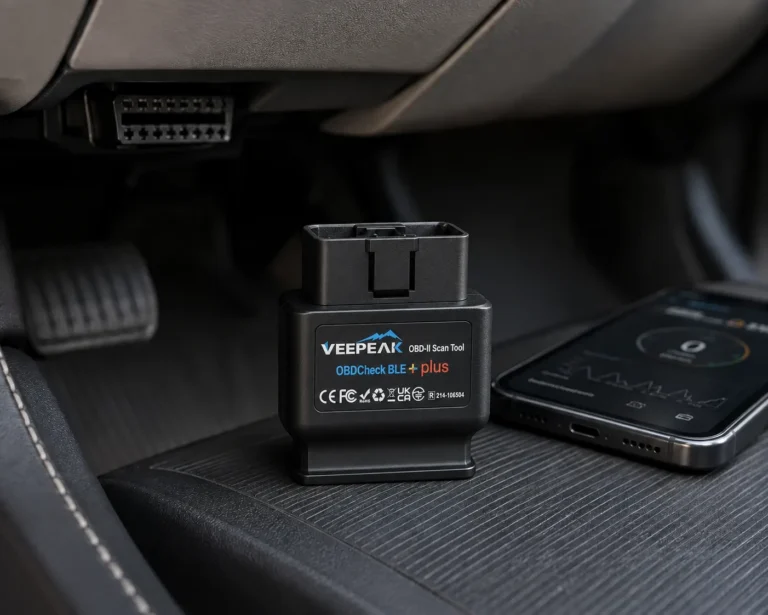
Veepeak OBDCheck BLE+ Plus
- Bluetooth LE for iOS and Android
- Broad third-party app ecosystem
- Real-time sensor data
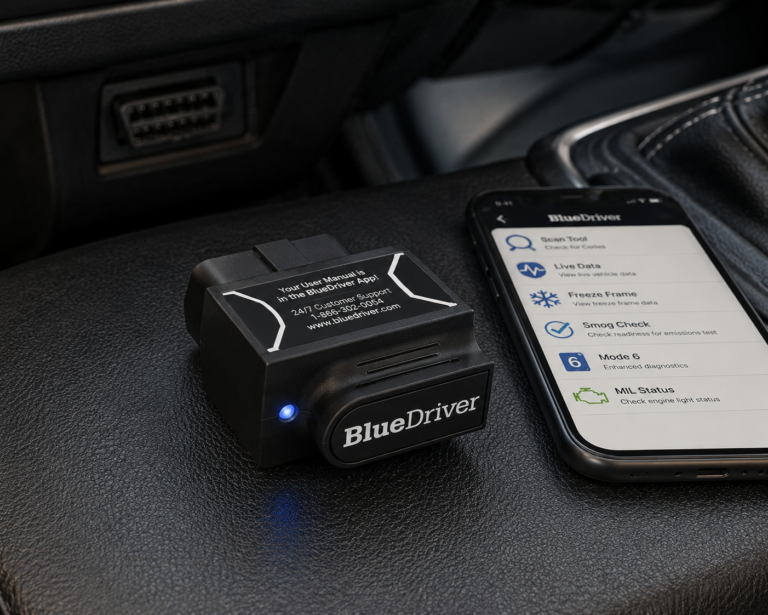
BlueDriver Pro Next-Gen
- Integrated Bluetooth/app ecosystem
- Enhanced diagnostics on supported vehicles
- Repair Reports
Affiliate Disclosure: Scan Choice Guide is a participant in the Amazon Services LLC Associates Program, an affiliate advertising program designed to provide a means for sites to earn advertising fees by advertising and linking to Amazon.com.
The 9 Best OBD2 Scanners Under $100, Ranked and Reviewed
1. Foxwell NT301: Best Overall OBD2 Scanner Under $100
Why We Picked It
The Foxwell NT301 represents what a good budget scanner should be.
It does not pretend to be a professional full-system diagnostic tablet.
Instead, it focuses on standard OBD2 work and adds enough usability to make that work easier.
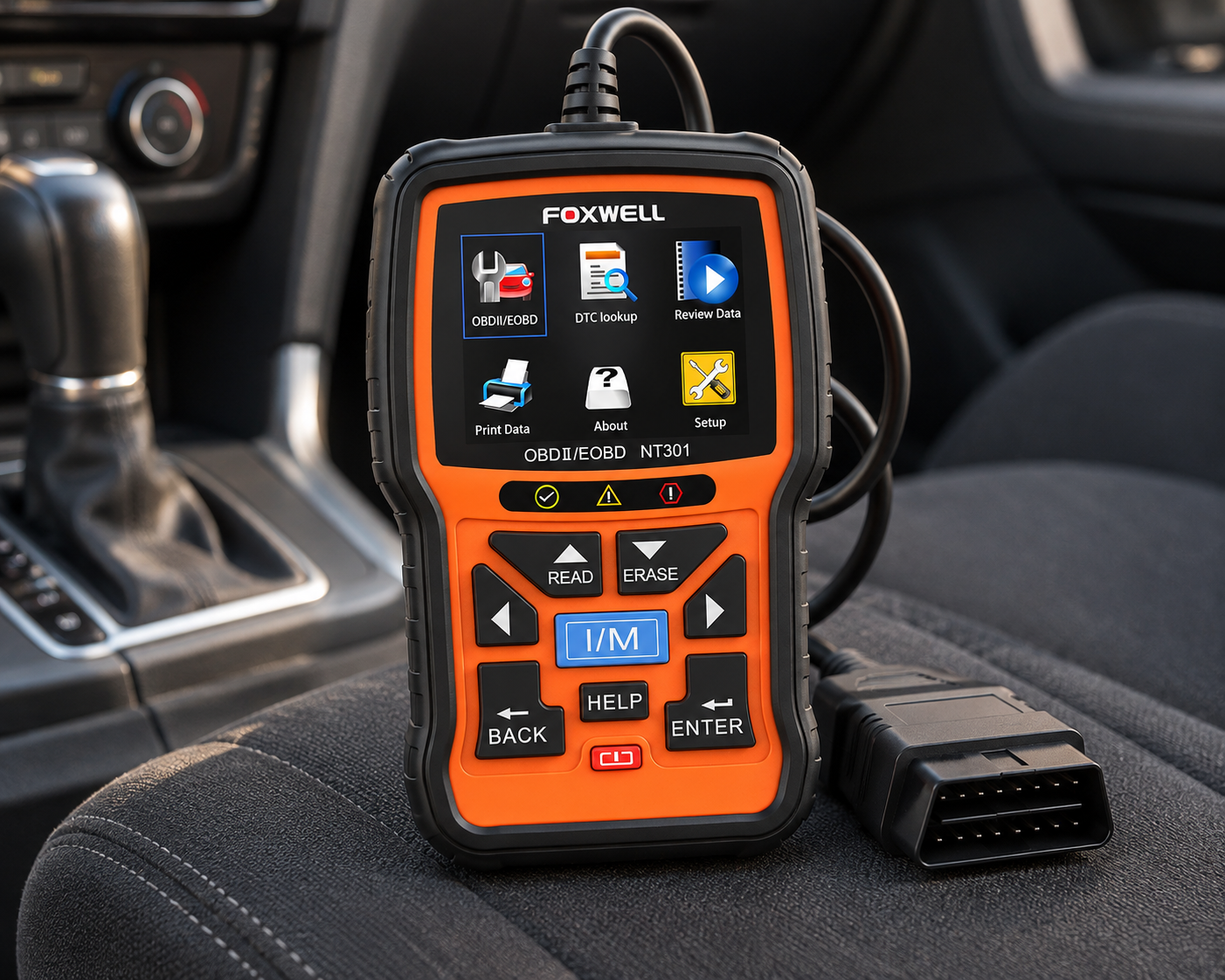
Foxwell documents the NT301 as a CAN OBDII/EOBD code reader with a 2.8-inch color display, one-button I/M readiness access and DTC read/erase capability.
Current 2026 competitor research also repeatedly surfaces the NT301 in the under-$100 segment, particularly for buyers who want a dedicated scanner rather than a phone adapter.
Live-data graphing is an important advantage over the cheapest code readers.
A trouble code tells you where the diagnostic process begins.
Live data can help you see what the engine management system is actually reporting.
Where It Falls Short
The NT301 is fundamentally an engine/emissions OBD2 scanner.
Do not buy it expecting full ABS, SRS, body-module or bidirectional diagnostics.
It also uses a wired dedicated format.
For some buyers that is an advantage. For others, a Bluetooth adapter provides more flexible dashboards and logging.
| Pros | Cons |
|---|---|
| Standard OBD2 code reading and clearing | Engine/emissions focused |
| Dedicated 2.8-inch color display | |
| Live-data capability | |
| Live-data graphing | |
| One-button I/M readiness | Wired rather than wireless |
| No smartphone required | |
| Established budget-market presence | |
| Simple ownership |
Best For
DIY owners who want a serious dedicated engine-code reader with useful live data but do not need advanced vehicle-system diagnostics.
SCG Verdict
The NT301 is our overall under-$100 choice because it uses the budget intelligently: better diagnostic usability rather than exaggerated claims about professional-level capability.
2. ANCEL AD310: Best Ultra-Budget Code Reader
Why We Picked It
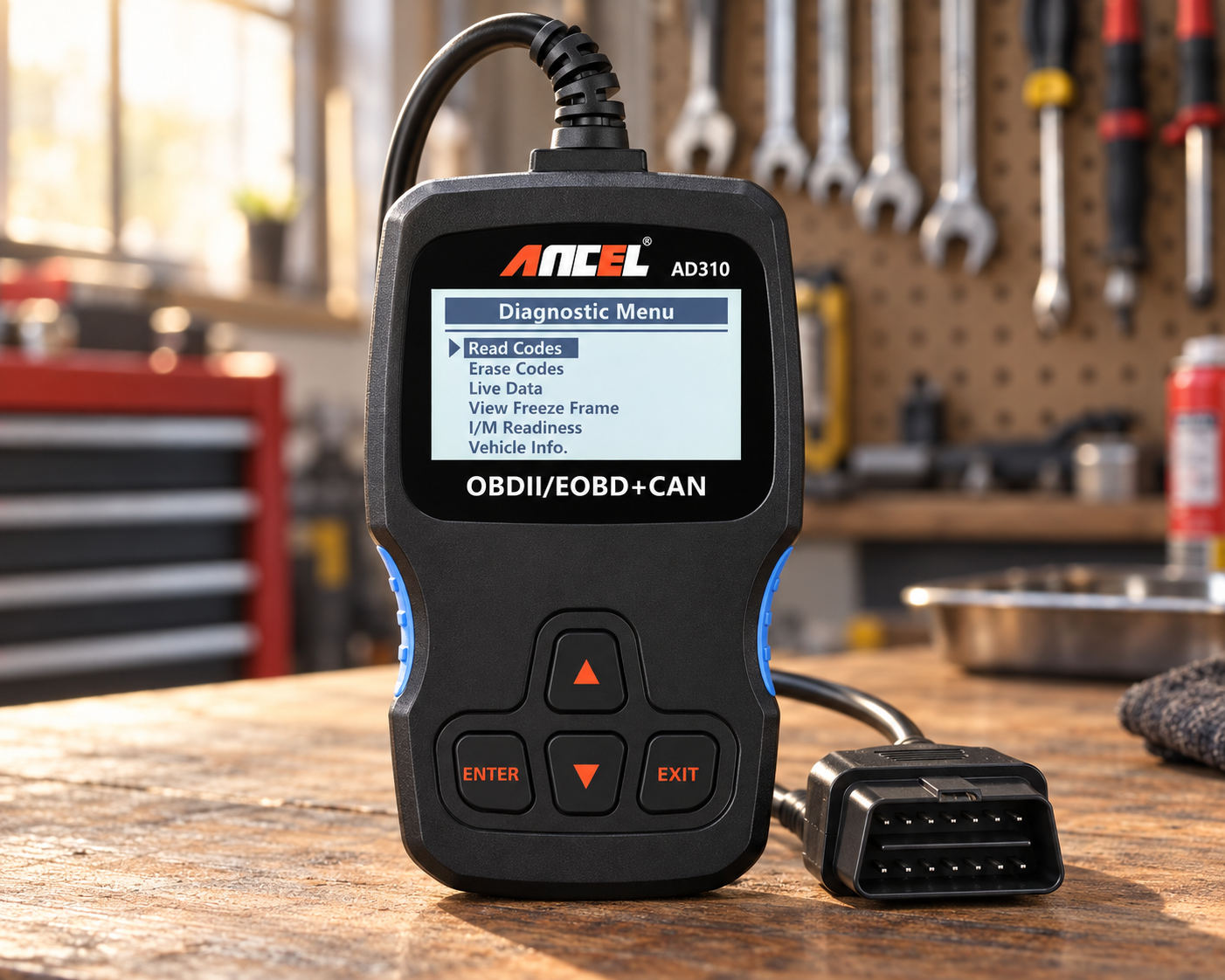
The ANCEL AD310 is one of the most visible names in the basic OBD2 market.
Current 2026 search results continue to surface it as a simple budget choice for drivers who primarily want to identify and clear Check Engine-related codes.
That popularity makes sense.
A large percentage of scanner buyers do not need active tests, coding or full-system diagnosis.
They want answers to basic questions: Why is the Check Engine light on? What trouble code is stored? Is the vehicle ready for an emissions inspection? Can I clear the code after the problem is repaired?
The AD310 targets that buyer.
Where It Falls Short
Its simplicity is also its limitation.
This is not the scanner for ABS, airbags, advanced service procedures or component activation.
It should not be ranked against professional tablets by feature count because it solves a different problem.
| Pros | Cons |
|---|---|
| Very simple dedicated workflow | Basic diagnostic depth |
| Generic OBD2 diagnostics | |
| Check Engine code reading/clearing | |
| Freeze-frame/emissions-related functions | |
| No phone required | No broad ABS/SRS access |
| Strong current budget-market visibility | |
| Suitable for beginners |
Best For
Drivers who want a simple low-cost scanner primarily for Check Engine and emissions-related OBD2 work.
SCG Verdict
The AD310 is the right kind of budget tool: inexpensive because it is focused, not because it promises advanced functions it cannot reliably deliver.
3. Veepeak OBDCheck BLE+ Plus: Best Bluetooth Value Under $100
Why We Picked It
Bluetooth adapters change the budget-scanner equation.
Instead of paying for a screen and operating interface inside the scanner, the adapter uses the phone or tablet you already own.
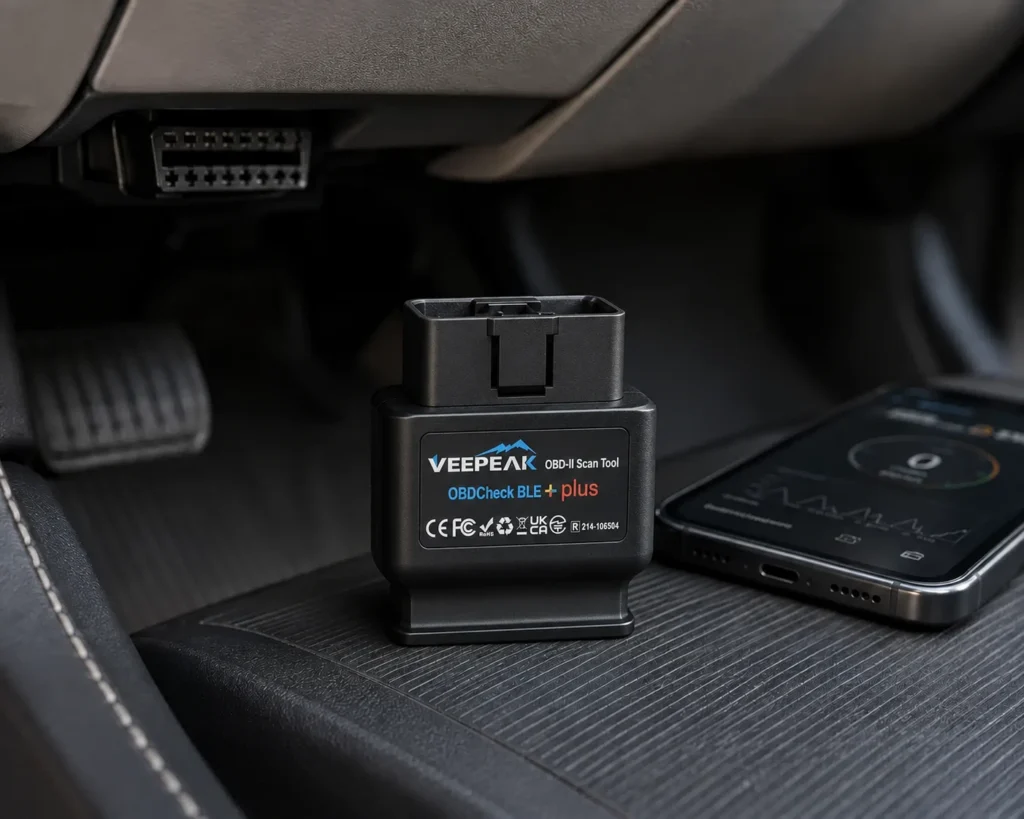
Veepeak’s OBDCheck BLE+ Plus is particularly interesting because Veepeak officially supports Bluetooth LE for iOS and Bluetooth connectivity for Android/Windows and documents compatibility with a broad range of third-party apps.
For generic OBD2, Veepeak lists Check Engine DTC reading, Check Engine light reset, I/M readiness and real-time sensor data.
The larger opportunity is app flexibility.
Depending on the vehicle and app, users can choose platforms such as Car Scanner, OBD Fusion, Torque, BimmerCode, BimmerLink, JScan and others.
That makes the hardware more flexible than a fixed-interface code reader.
Where It Falls Short
The adapter and the app are separate parts of the diagnostic system.
Veepeak explicitly states that an OBD2 app is required and not included.
Some apps are free, some are paid, and some advanced features require in-app purchases or subscriptions.
Veepeak also explicitly lists several functions the adapter itself should not be assumed to provide, including oil/service resets, EPB/brake reset, relearning and adaptation unless the selected app/vehicle combination independently supports them.
Enhanced diagnostics are not guaranteed by generic OBD2 compatibility.
| Specification | Details |
|---|---|
| Connectivity | Bluetooth LE (iOS) / Classic Bluetooth (Android, Windows), ELM327 v2.2 chipset |
| Protocols | SAE J1850 PWM/VPW, ISO 9141-2, ISO 15765-4 CAN, ISO 14230-4 KWP 2000 (no MS-CAN/SW-CAN) |
| Vehicle compatibility | 1996+ USA, 1998+ Canada, 2001/2004+ EU (gas/diesel); excludes EVs (confirm your exact vehicle via the SCG Finder) |
| App model | No bundled app; requires a compatible third-party app (BimmerCode, Carista, Car Scanner ELM OBD2, Torque, OBD Fusion, and others) |
| Documented incompatible apps | Carly, MHD, xHP, ProTool, bootmod3 (per Veepeak’s own page) |
| ECU coding / service resets | Explicitly not supported per Veepeak (injector coding, EPB reset, ABS bleeding, oil/service resets) |
| What’s included | Device, carrying case, user manual (per Veepeak’s own listing) |
| Pros | Cons |
|---|---|
| Bluetooth LE for iOS | Explicitly incompatible with several premium coding apps (Carly, MHD, xHP, ProTool, bootmod3) |
| Bluetooth support for Android | |
| Broad third-party app ecosystem | |
| Generic OBD2 code reading | |
| Check Engine reset | |
| I/M readiness | |
| Real-time sensor data | |
| Compact hardware | |
| Flexible dashboards/logging depending on app |
Best For
DIY users who prefer phone-based diagnostics and want to choose the software interface themselves.
SCG Verdict
OBDCheck BLE+ Plus is our Bluetooth value choice because its strength is not a fake all-in-one feature list; it is a flexible, well-documented adapter ecosystem. See our full Veepeak OBDCheck BLE+ Plus review for the adapter ecosystem behind that flexibility.
4. BlueDriver Pro Next-Gen: Best Premium Bluetooth Choice Near the $100 Ceiling
Why We Picked It
BlueDriver takes a different approach from Veepeak.
Veepeak provides flexible hardware for third-party apps.
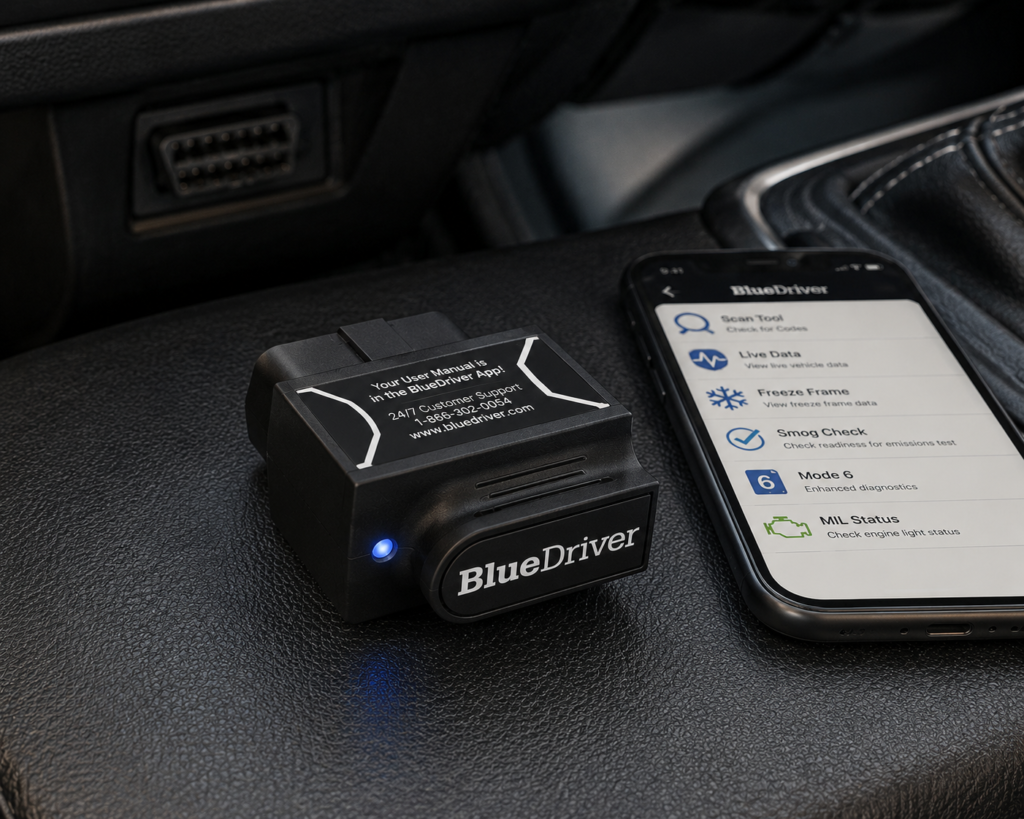
BlueDriver provides a more integrated hardware-and-app ecosystem.
For supported vehicles, BlueDriver goes beyond generic OBD2 with enhanced diagnostics and Repair Reports.
The company also currently states that its core platform has no subscriptions and no add-ons.
That makes it particularly attractive to buyers who want a more guided smartphone experience rather than selecting and configuring third-party diagnostic apps themselves.
BlueDriver also has strong current search-market visibility, appearing repeatedly in modern OBD2 recommendations.
Where It Falls Short
Enhanced diagnostics also vary by vehicle.
BlueDriver is not a universal bidirectional scanner, coding platform or full professional diagnostic tablet.
| Specification | Details |
|---|---|
| Connectivity | Bluetooth dongle, pairs with the free BlueDriver app on iOS/Android |
| Vehicle compatibility | 1996 and newer gas, diesel, and hybrid vehicles sold in North America (confirm your exact vehicle via the SCG Finder) |
| Enhanced code reading | ABS, SRS/airbag, transmission, TPMS, 4WD/AWD, hybrid/EV codes on a documented brand list; coverage varies by model/year |
| Repair context | “Confirmed Fix” reports showing real repairs for the same code on the same vehicle |
| Subscription policy | “No subscriptions. No add-ons. Ever.” per BlueDriver’s official page |
| Screen | None; requires a compatible phone with the BlueDriver app |
| Pros | Cons |
|---|---|
| Integrated Bluetooth/app ecosystem | No standalone screen; requires a compatible phone |
| Generic OBD2 diagnostics | |
| Enhanced diagnostics on supported vehicles | |
| Repair Reports | |
| Live data | |
| No subscription under current BlueDriver policy | |
| Strong current market/search visibility |
Best For
Drivers who want a polished phone-based diagnostic experience with supported enhanced diagnostics and minimal software-selection complexity.
SCG Verdict
BlueDriver is the premium Bluetooth choice when it remains within the category ceiling. Its value is integration and diagnostic guidance rather than being the cheapest adapter. Our full BlueDriver review covers the diagnostic guidance that justifies its premium over a bare adapter.
5. ANCEL BD310: Best Hybrid Handheld + Bluetooth Choice
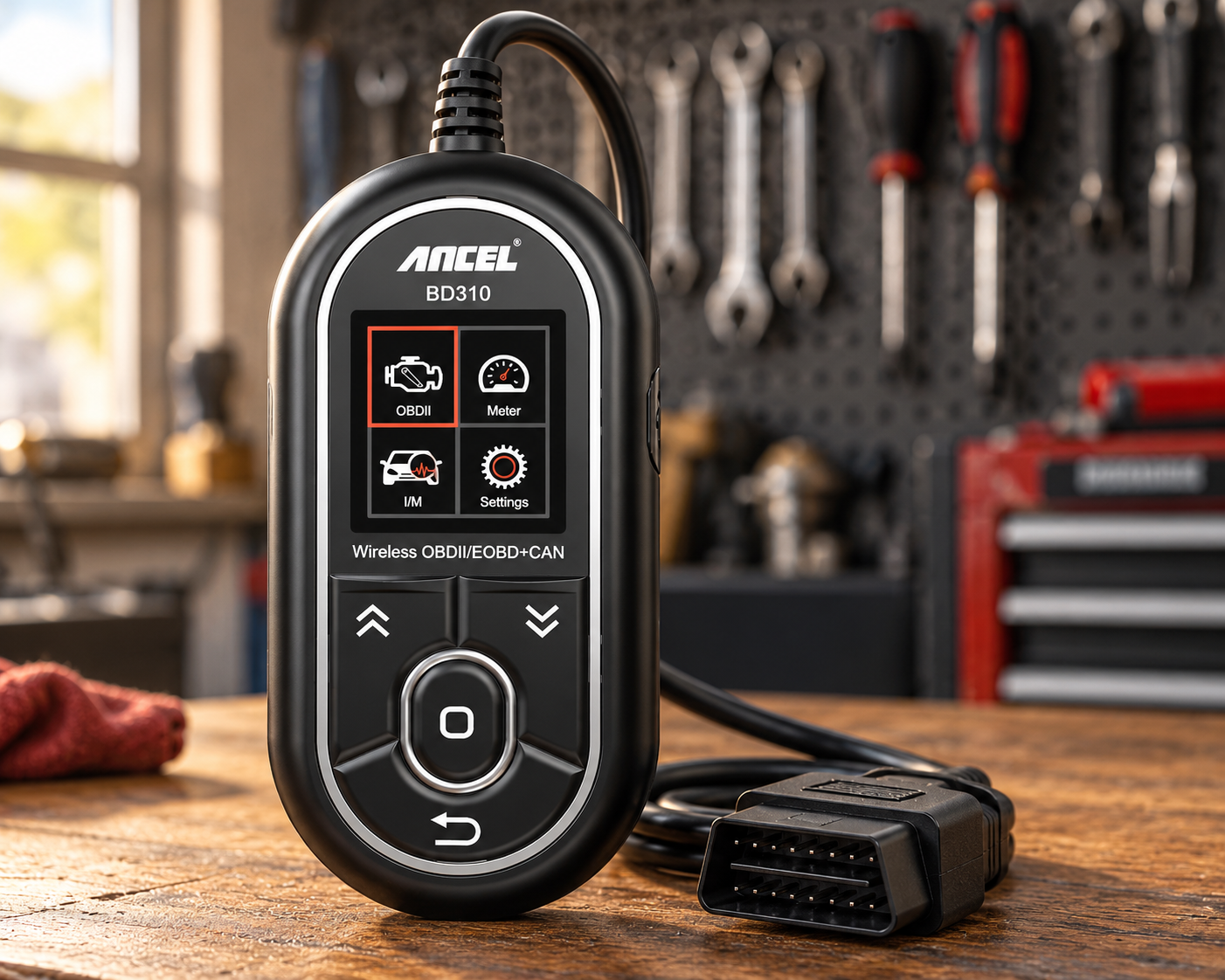
Why We Picked It
Most budget scanners force the buyer to choose: dedicated handheld or phone-based adapter.
The ANCEL BD310 is interesting because its design combines both approaches.
It can function as a traditional scanner while also providing Bluetooth connectivity for smartphone-based use.
That flexibility has helped it remain visible in major OBD2 comparison coverage.
For a buyer who wants to keep a scanner in the vehicle and read a code without reaching for a phone, but still wants smartphone-based live-data flexibility, the hybrid concept makes sense.
Where It Falls Short
The BD310 should still be evaluated as a budget OBD2 tool.
Its dual-interface design does not automatically turn it into a full-system or bidirectional scanner.
Buyers who specifically need ABS/SRS, coding or service procedures should choose based on those verified functions rather than the convenience of Bluetooth.
| Pros | Cons |
|---|---|
| Dedicated handheld operation | Not a full-system platform |
| Bluetooth smartphone option | |
| Generic OBD2 diagnostics | |
| Live-data usefulness | Exact current U.S. model/listing should be verified |
| Flexible workflow | |
| Strong recognition in current scanner comparisons |
Best For
Owners who cannot decide between a traditional scanner and a Bluetooth adapter and genuinely want both workflows.
SCG Verdict
The BD310 earns its place because hardware flexibility is a real user benefit, not because it tries to compete with advanced tablets.
6. Autel AutoLink AL319: Best for Simple Emissions Checks
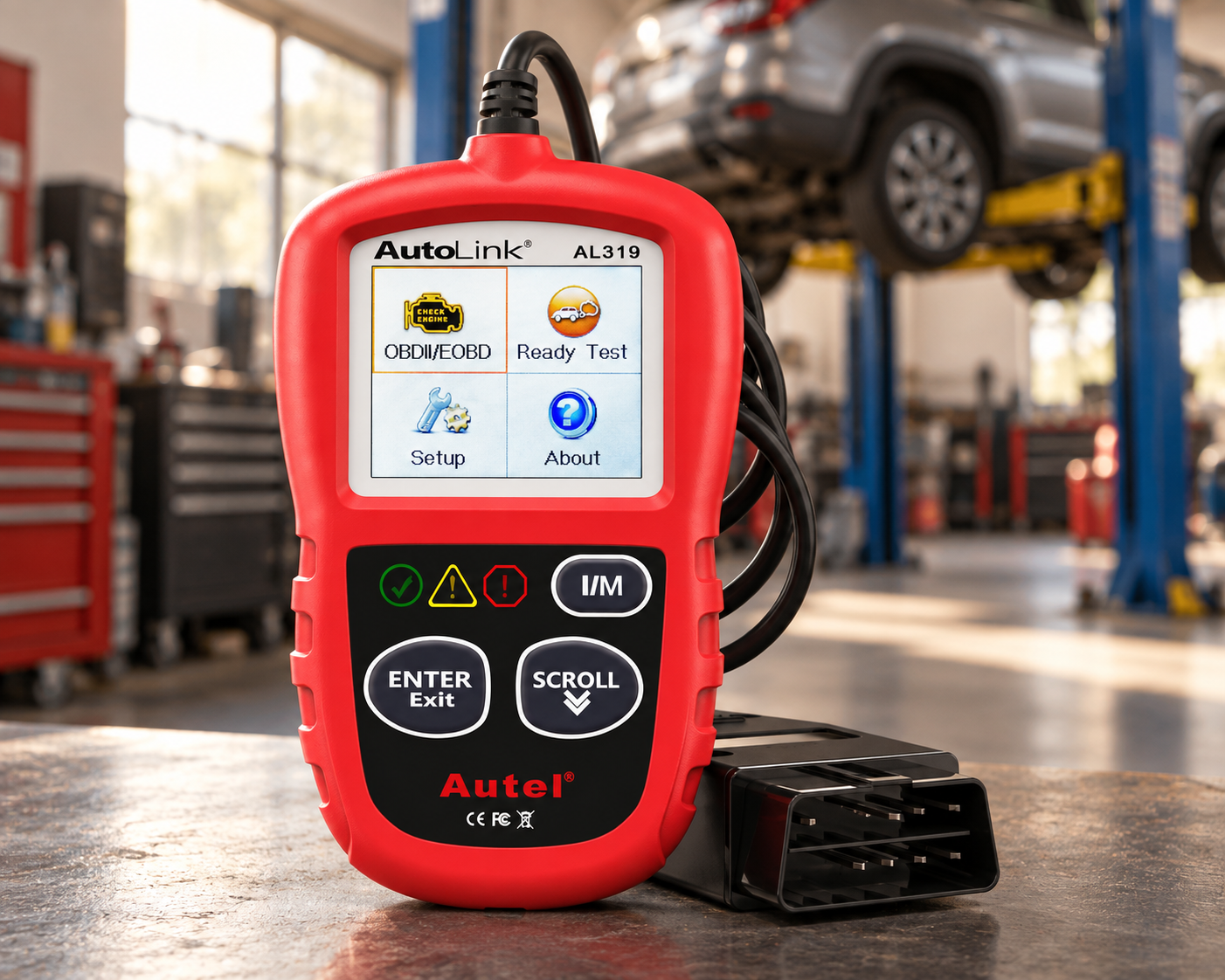
Why We Picked It
Autel’s AL319 is built around the basic tasks many drivers actually perform.
Its strongest use case is emissions-oriented OBD2 diagnosis.
A dedicated scanner with a clear readiness interface can be more convenient than navigating an app when the immediate question is: is the vehicle ready for an emissions inspection?
The AL319 is also widely recognized in the budget-scanner market, which makes it commercially more relevant than an obscure scanner with a longer feature list.
Where It Falls Short
The AL319 belongs to the basic-code-reader class.
Do not expect full-system diagnostics, advanced service functions or bidirectional testing.
If live-data analysis is a priority, compare it carefully with NT301 and app-based alternatives.
| Pros | Cons |
|---|---|
| Dedicated scanner | Basic diagnostic depth |
| Generic OBD2 diagnostics | |
| Emissions-readiness focus | |
| Check Engine code workflow | |
| No phone required | No full-system diagnostics |
| Established Autel brand | |
| Beginner-friendly use case |
Best For
Drivers primarily interested in Check Engine diagnostics and emissions-readiness checks.
SCG Verdict
AL319 is a focused tool for a focused job. That is exactly what many under-$100 buyers need.
7. Veepeak OBDCheck BLE: Best for App Flexibility at a Lower Hardware Tier
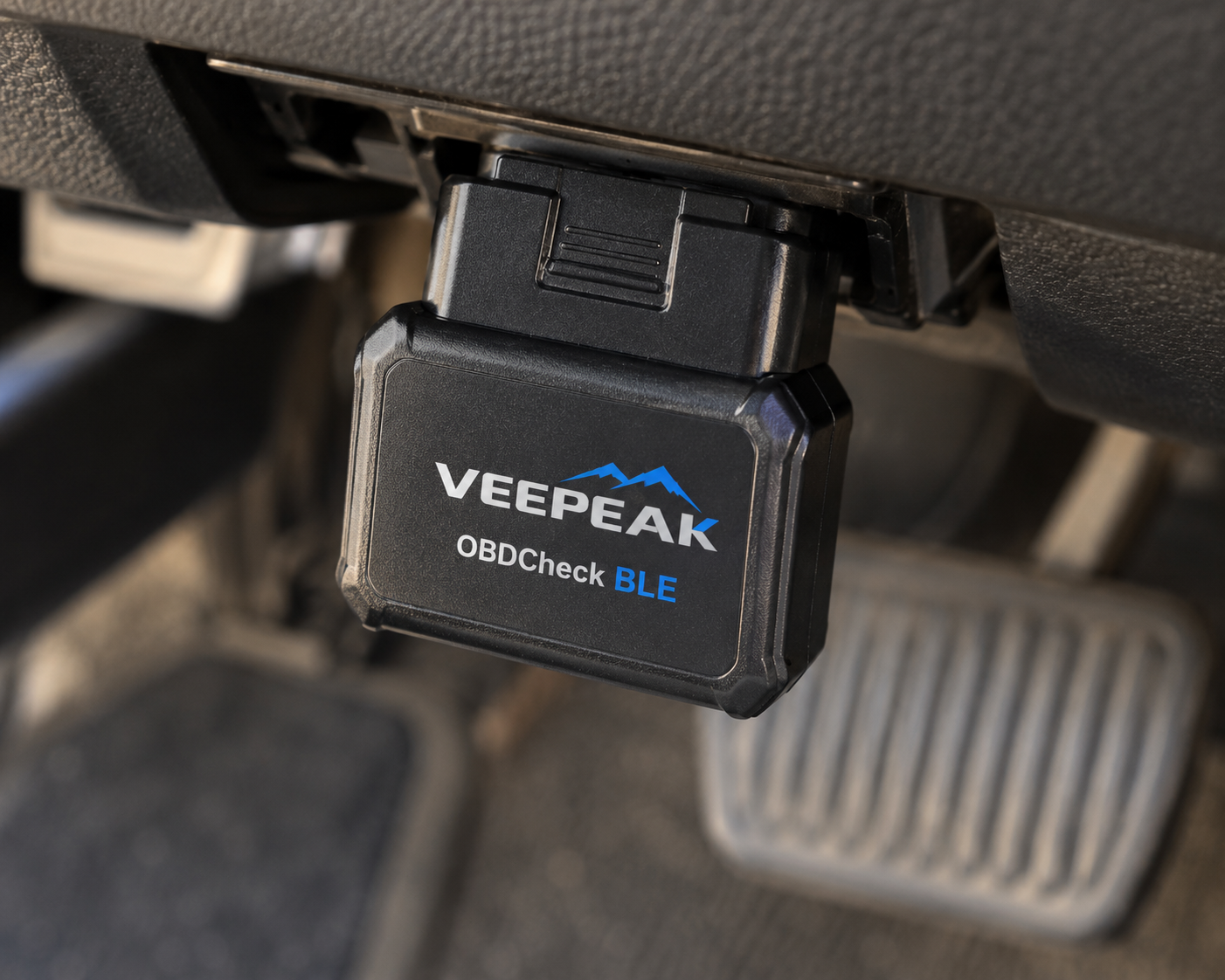
Why We Picked It
The standard OBDCheck BLE provides much of the same fundamental ownership philosophy as the BLE+ Plus: buy compact adapter hardware and choose the app that fits your vehicle and use case.
The manufacturer lists iOS and Android support, Bluetooth LE and Classic Bluetooth, generic Check Engine diagnostics, freeze-frame data, I/M readiness and real-time sensor readings.
The app ecosystem can add substantial flexibility.
Veepeak’s own support documentation lists Car Scanner, OBD Fusion, Torque, Infocar, BimmerCode, BimmerLink, JScan, Carista and other applications, with different capabilities and payment models.
Where It Falls Short
The same caveat applies as with BLE+ Plus: the adapter is not the app.
Advanced functions come from a compatible combination of hardware, software and vehicle support.
Veepeak explicitly warns that generic compatibility does not include enhanced transmission, ABS, airbag, body-control or TPMS functions.
| Pros | Cons |
|---|---|
| iOS and Android support | Requires a phone/tablet |
| Bluetooth LE / Classic Bluetooth | |
| Broad app choice | |
| Generic OBD2 diagnostics | |
| Freeze-frame data | |
| I/M readiness | App required |
| Real-time sensor readings | |
| Manufacturer labels it a current Best Seller | |
| Compact format |
Best For
Budget-conscious users who value third-party app choice more than a dedicated scanner interface.
SCG Verdict
OBDCheck BLE is one of the clearest examples of why market popularity and technical fit should both matter: it is commercially visible, but SCG still defines exactly what the hardware can and cannot promise.
8. Veepeak OBDCheck VP11: Best Simple Wired Alternative
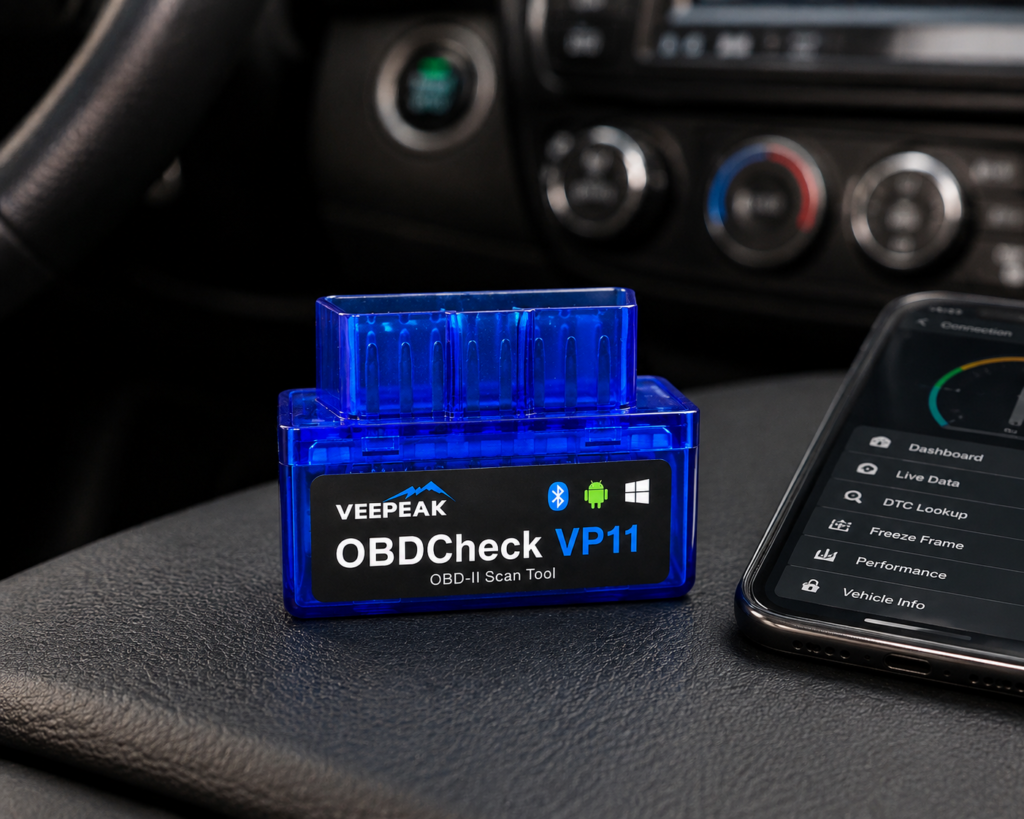
Why We Picked It
Not every budget buyer wants an app.
Some want a scanner that plugs in, powers from the vehicle and performs basic diagnostic work immediately.
Veepeak’s current product/support catalog still includes the OBDCheck VP11 as part of its scanner lineup.
That makes it relevant as a traditional wired alternative within a market increasingly dominated by Bluetooth adapters.
The advantage is simplicity.
No phone pairing. No app selection. No concern about whether the phone’s operating system changes.
Where It Falls Short
A basic wired scanner has less interface flexibility than a smartphone platform.
It should also remain firmly within the generic OBD2 use case unless manufacturer documentation confirms more.
Buyers who want extensive live-data dashboards or enhanced manufacturer diagnostics should look elsewhere.
| Specification | Details |
|---|---|
| Connectivity | Classic Bluetooth, PIC18F25K80 chip, ELM327 v1.4/v1.5-compatible |
| Platform support | Android and Windows only; explicitly not compatible with iOS (per Veepeak) |
| Protocols | SAE J1850 PWM/VPW, ISO 9141-2, ISO 15765-4 CAN, ISO 14230-4 KWP 2000 |
| Vehicle compatibility | 1996+ USA, 1998+ Canada, 2001/2004+ EU (confirm your exact vehicle via the SCG Finder) |
| App model | No bundled app; requires a third-party Android app (Torque, Car Scanner ELM OBD2, OBD Fusion, and others) |
| Advanced diagnostics | Not supported (ABS, SRS, TPMS, transmission), per Veepeak’s own page |
| Service/reset functions | Not supported (oil light reset and similar), per Veepeak’s own page |
| Pros | Cons |
|---|---|
| Dedicated wired format | No iOS support; Android and Windows only |
| No smartphone required | |
| No Bluetooth pairing | |
| Simple generic OBD2 use | |
| Current Veepeak product-family support presence | |
| Good backup/glovebox concept |
Best For
Drivers who value simplicity and want a dedicated wired code reader instead of a phone-based adapter.
SCG Verdict
The VP11 is intentionally simple. In a budget guide, that is a legitimate category rather than a weakness to hide. See our full Veepeak OBDCheck VP11 review to confirm that simplicity matches what you actually need.
9. LAUNCH CR529: Best Market-Verified Budget Alternative
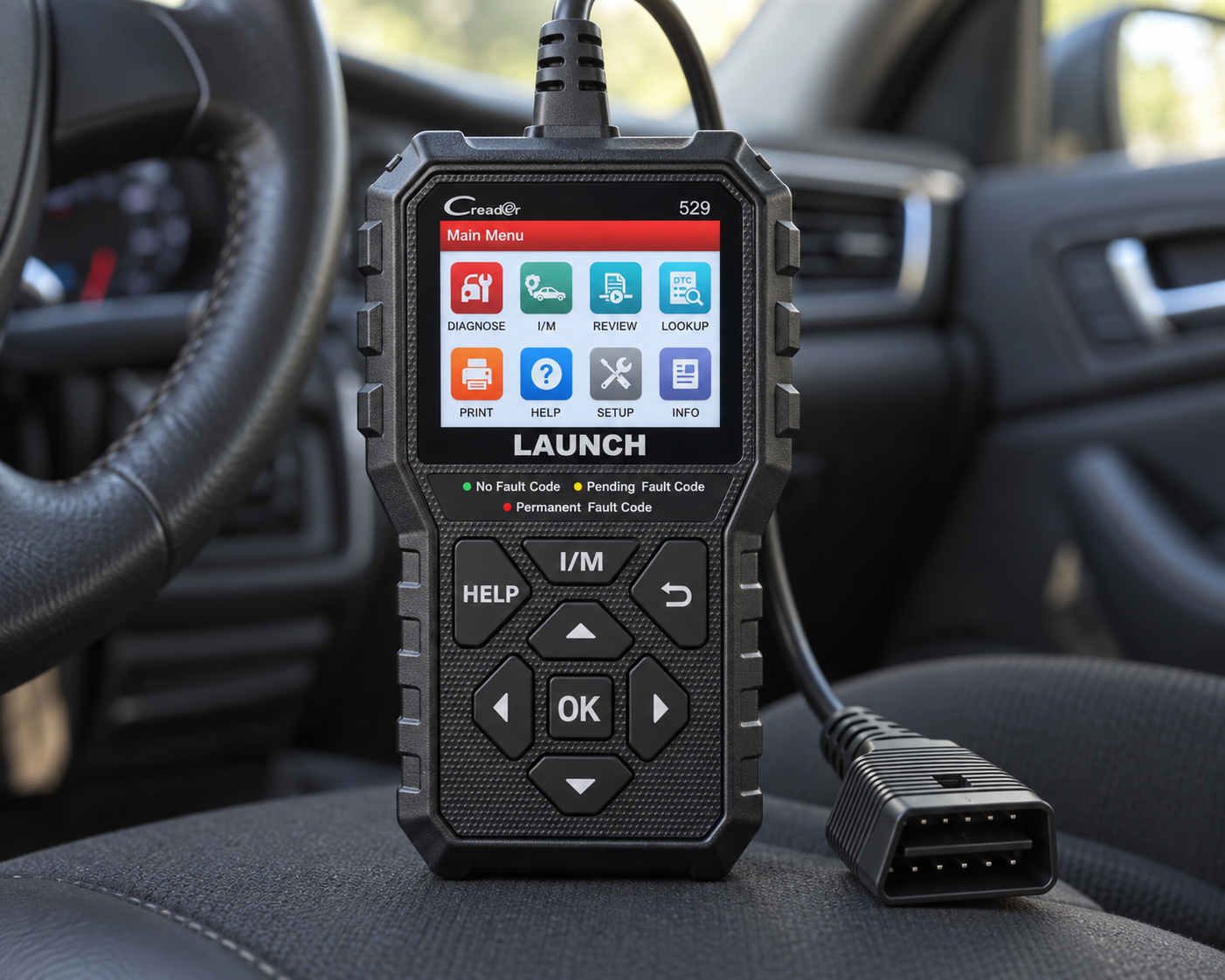
Why We Picked It
A budget guide should not rely only on manufacturer feature sheets.
Current market evidence matters too.
Tom’s Guide’s current 2026 OBD2 scanner comparison identifies the LAUNCH CR529 as its budget-friendly recommendation and describes it as providing strong functionality in the sub-$50 class at the time of its review.
That does not prove it is the best scanner for every buyer.
But it is a useful independent market signal that the CR529 remains commercially relevant in the budget segment.
SCG includes it as an alternative for buyers who want a dedicated LAUNCH code-reader format rather than Bluetooth hardware.
Where It Falls Short
Current independent market evidence is strong enough to justify researching the model, but SCG’s standard requires authoritative evidence for exact technical claims.
Therefore we deliberately keep the public claim set conservative until the exact current U.S. CR529 manufacturer documentation is reconfirmed.
| Pros | Cons |
|---|---|
| Strong current 2026 independent market visibility | Exact current manufacturer specifications require final verification |
| Dedicated scanner format | |
| Budget-focused positioning | |
| LAUNCH ecosystem/brand | Current price must remain under category ceiling |
| Alternative to Bluetooth adapters |
Best For
Budget buyers who want a dedicated LAUNCH scanner and prefer a model with current independent-market visibility.
SCG Verdict
CR529 earns a place because current market evidence says buyers are still encountering and considering it. Final publication, however, remains conditional on exact authoritative model verification.
What Should an OBD2 Scanner Under $100 Actually Do?
At minimum, a good budget scanner should reliably handle the standard OBD2 functions relevant to its supported vehicles.
Typical useful functions include: read generic powertrain DTCs, clear supported Check Engine DTCs after repair, view freeze-frame information, check I/M readiness, read vehicle information where supported, display live engine data.
More advanced features can exist in this price class, particularly through smartphone apps.
But they should be treated as bonuses only after exact compatibility is verified.
What Should You Not Expect Under $100?
Do not automatically expect: full-system diagnostics, universal ABS/SRS access, bidirectional active tests, ECU coding, ECU programming, DoIP, broad CAN FD enhanced diagnostics, dozens of universal service functions, professional shop workflow.
Some products or app combinations may provide selected enhanced capabilities.
That does not make those features universal across the category.
Wired Scanner or Bluetooth Adapter?
This is the biggest decision in the under-$100 market.
Choose a wired dedicated scanner if you want: plug-and-play operation, no phone dependency, no Bluetooth pairing, no app selection, a tool that can stay in the vehicle, predictable interface.
Choose Bluetooth if you want: larger phone display, custom dashboards, better graphing potential, data logging, app choice, compact hardware, potential manufacturer-specific features through compatible apps.
Neither format is automatically better.
Why the App Matters as Much as the Bluetooth Adapter
A Bluetooth OBD2 dongle is communication hardware.
The app determines much of the user experience and, in some cases, the enhanced functionality.
Veepeak illustrates this clearly.
Its hardware can work with multiple apps, but Veepeak explicitly explains that some apps are paid and that advanced features depend on the selected app and vehicle.
Therefore, SCG evaluates Bluetooth products as: Adapter + App + Vehicle, not simply: Adapter.
BlueDriver vs. Veepeak Under $100
These products represent two different philosophies.
BlueDriver: Integrated adapter/app ecosystem, more guided experience, supported enhanced diagnostics, Repair Reports, current no-subscription/no-add-on core policy.
Veepeak: Open third-party app choice, greater software flexibility, potentially lower hardware cost, advanced functions depend heavily on selected app, some apps require separate payment.
Choose based on the ownership model you prefer.
Does “Under $100” Mean the Scanner Will Always Cost Less Than $100?
No.
Retail prices change. Sales end. Coupons change. Third-party sellers change.
A product can move above or below a category threshold.
We do not publish a permanent Amazon price next to each product.
Do Amazon Popularity and Google Demand Matter?
Yes: but they are supporting evidence.
A scanner that nobody searches for, nobody stocks and few buyers consider may be technically interesting but commercially weak for an affiliate buying guide.
Starting with this guide, SCG explicitly considers: current Google/SERP visibility, U.S. market presence, manufacturer availability, current commercial relevance, competitor frequency, popularity signals where they can be verified.
But popularity does not override technical fit.
A popular scanner can still be the wrong scanner for a specific job.
Why We Do Not Call These “Best-Selling” Scanners
SCG does not have verified Amazon unit-sales data for every listing in the category.
Review counts, badges, search rankings and marketplace visibility can indicate popularity.
They do not prove exact sales volume.
Therefore this guide uses market-demand signals without pretending to know a sales ranking that cannot be independently verified.
What About Amazon “Best Seller” Badges?
A current badge can be useful evidence when directly observed.
But badges can change.
They also apply within specific marketplace categories.
For example, a manufacturer’s own store may label a product a Best Seller. That is a popularity signal, not proof that it is Amazon’s overall #1 OBD2 scanner.
SCG keeps those claims separate.
Under $100 vs. Under $200
The difference is not simply another $100.
Under $100 is dominated by: generic OBD2 code readers, Bluetooth adapters, engine live data, emissions readiness, selected enhanced app-based features.
Moving toward the under-$200 segment can open the door to more: ABS/SRS diagnostics, transmission diagnostics, service functions, dedicated multi-system scanners, some more advanced app platforms.
Buy for the function you need, not the largest budget you can afford.
Best OBD2 Scanners Under $200 in 2026
Common Under-$100 Buying Mistakes
Mistake 1: Buying by Feature Count
Cheap marketplace listings can make extraordinary claims. Verify them.
Mistake 2: Assuming Every OBD2 Scanner Reads ABS
Generic OBD2 does not guarantee ABS access.
Mistake 3: Ignoring App Costs
A cheap Bluetooth adapter can use paid software. That may still be excellent value, but it is part of ownership cost.
Mistake 4: Assuming Bluetooth Means More Diagnostic Depth
Wireless communication and diagnostic capability are different things.
Mistake 5: Paying for Features You Do Not Need
A driver who only checks a Check Engine light may be better served by AD310 or AL319 than a more complex app ecosystem.
Mistake 6: Buying Too Little Scanner
If your actual goal is ABS bleeding, SRS diagnostics or active tests, this price class may be the wrong place to start.
Mistake 7: Trusting a Permanent Price
Always recheck the current market price before classifying a product as under $100.
Mistake 8: Confusing Popularity With Capability
A best-selling basic reader is still a basic reader.
Our Final Recommendations
For most buyers who want a dedicated scanner under $100, Foxwell NT301 offers the strongest balance of simplicity and useful live-data capability.
For the simplest ultra-budget Check Engine tool, ANCEL AD310 remains a highly visible market choice.
For Bluetooth flexibility, Veepeak OBDCheck BLE+ Plus gives users access to a broad third-party app ecosystem.
For a more integrated premium Bluetooth experience, BlueDriver Pro Next-Gen is the choice when its current market price remains below the category ceiling.
For buyers who want both a handheld and smartphone workflow, ANCEL BD310 is the hybrid option.
For straightforward emissions-readiness use, Autel AL319 remains easy to understand.
For lower-tier app flexibility, Veepeak OBDCheck BLE is a commercially relevant alternative.
For buyers who want no app at all, Veepeak VP11 provides a simple wired route.
And LAUNCH CR529 is included as a current market-verified budget alternative pending final exact manufacturer-level verification.
The important point is not to squeeze the most features into $100.
It is to buy the correct type of scanner.
Quick Picks
Best Overall Under $100: Foxwell NT301
A dedicated wired scanner with live-data graphing, one-button emissions readiness and a strong current presence in the budget OBD2 market.
Best Ultra-Budget Code Reader: ANCEL AD310
A simple wired scanner for owners who mainly need Check Engine codes, freeze frame and emissions-related OBD2 functions.
Best Bluetooth Value: Veepeak OBDCheck BLE+ Plus
A compact iOS/Android adapter with broad third-party app support and a flexible app-based diagnostic ecosystem.
Best Premium Bluetooth Choice Near the Ceiling: BlueDriver Pro Next-Gen
A phone-based scanner with enhanced diagnostics on supported vehicles, Repair Reports and a no-subscription/no-add-on core ownership model.
Best Hybrid Handheld + Bluetooth Choice: ANCEL BD310
A scanner that can work as a dedicated handheld and also connect to a phone for a more flexible live-data experience.
Best for Simple Emissions Checks: Autel AutoLink AL319
A straightforward dedicated code reader with a highly accessible I/M readiness workflow for owners focused on engine/emissions diagnostics.
Best for App Flexibility: Veepeak OBDCheck BLE
A lower-cost Veepeak adapter with iOS/Android support and compatibility with numerous third-party apps.
Best Simple Wired Alternative: Veepeak OBDCheck VP11
A dedicated wired choice for buyers who do not want Bluetooth, apps or another device to charge.
Best Market-Verified Budget Alternative: LAUNCH CR529
A current budget scanner that appears prominently in 2026 comparative testing and offers a dedicated-screen alternative to app-based tools.
Frequently Asked Questions
What is the best OBD2 scanner under $100 in 2026?
SCG’s current overall choice is Foxwell NT301 for buyers who want a dedicated scanner with standard OBD2 diagnostics and useful live-data functionality. Bluetooth users may prefer Veepeak OBDCheck BLE+ Plus or BlueDriver depending on app preference and required enhanced coverage.
Can a scanner under $100 read ABS codes?
Some products or app combinations may provide enhanced ABS access on supported vehicles, but generic OBD2 capability does not include universal ABS diagnostics. If ABS/SRS is your primary requirement, use a guide built around that function.
Can a scanner under $100 perform bidirectional tests?
Do not assume so. Some newer app-based products advertise selected advanced functions, but broad bidirectional control is not a standard feature of this price class.
Is Bluetooth better than a wired OBD2 scanner?
Not automatically. Bluetooth provides app flexibility and better display/data options. Wired scanners provide simplicity and independence from a phone.
Does Veepeak include an app?
Veepeak states that an OBD2 app is required and not included with its OBDCheck BLE/BLE+ hardware. Compatible apps have their own free, paid or subscription models.
Does BlueDriver require a subscription?
No. BlueDriver’s Pro Next-Gen platform carries no subscription or add-on fees on its core diagnostic functions.
Is ANCEL AD310 enough for a home mechanic?
It can be enough if the required work is standard engine/emissions OBD2 diagnosis. It is not enough if the owner needs broad ABS/SRS, full-system or bidirectional diagnostics.
Should I buy a scanner under $100 or spend more?
Start with the required function. If standard Check Engine diagnosis is enough, spending more may provide little practical benefit. If you need safety-system access, service functions or active tests, a higher diagnostic tier can be justified.
Bottom Line
Under $100 is not the “bad scanner” category.
It is the focused scanner category.
The best products here solve ordinary diagnostic problems without pretending to replace professional equipment.
Foxwell NT301 is our overall dedicated choice.
ANCEL AD310 is the simple budget choice.
Veepeak BLE+ Plus is the flexible Bluetooth choice.
BlueDriver is the integrated phone-based choice when it remains under the budget ceiling.
And the remaining picks serve buyers who value hybrid hardware, emissions simplicity, app choice or a traditional wired workflow.
Choose the scanner for the job.